Bordes de vidrio laminado: química, humedad y límites
Identifique hojas e interlámina, proteja perímetros de líquidos y vapores incompatibles, reconozca neblina o burbujas y mantenga el pulido dentro de su alcance.
El material vulnerable quizá solo se vea en el borde
El vidrio laminado une dos o más hojas con una interlámina polimérica. En el centro puede parecer monolítico. En el perímetro, la interlámina puede quedar frente a cavidad, selladores, humedad, solución, vapor y lodo de restauración.
Un rayón superficial y una falla de interlámina son problemas distintos. El pulido puede cambiar el primero en una cara compatible. No revierte neblina, burbujas, separación, color o contaminación interna.
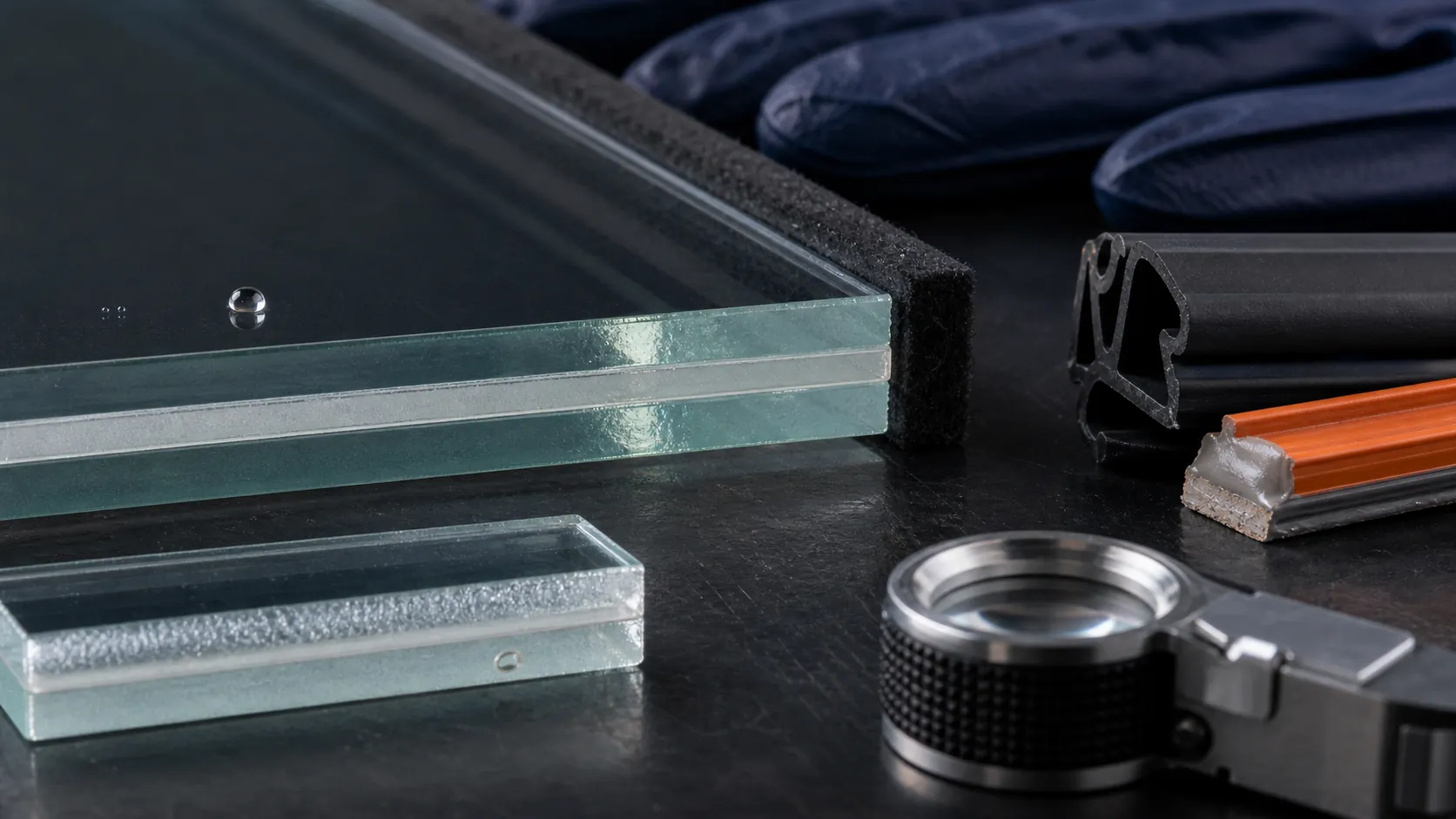
Describa el laminado antes de mojar
Registre espesor y tratamiento de cada hoja, tipo y espesor de interlámina, color, tono, capa, frita, película, borde, perforaciones, acristalamiento, sellador, juntas y caras expuestas. Use planos, etiquetas y datos del fabricante. Vidrio laminado de seguridad y película aplicada no son la misma construcción.
Inspeccione seco. Fotografíe neblina, burbujas, pliegues, color, corrosión, astillas, vacíos de sellador, agua estancada y patrones que crecen hacia dentro. Ubique la condición dentro del laminado, sobre una cara, detrás de película o en el alojamiento.
Aleje líquidos y vapores incompatibles
La guía NGA advierte que fluidos y vapores deben mantenerse lejos de bordes laminados expuestos. Para limpiar laminado señala que no se usen materiales corrosivos y enumera ácidos, bases, soluciones con cloro, amoníaco, tolueno, xileno, metil etil cetona y acetona.
No es una tabla completa para todo producto. Un limpiador de minerales u obra puede ser incompatible con interlámina, sellador, película, capa, marco o calzo. Obtenga aprobación para el conjunto exacto.
Controle cantidad además de química
Una solución rutinaria aprobada tampoco debe acumularse en el borde. Aplíquela con herramienta controlada, aleje el escurrido de cavidades abiertas y recoja lodo antes del perímetro. No sature un canal para perseguir residuo bajo la junta.
- Proteja borde inferior y acabados porosos con absorción compatible.
- No rocíe perforaciones, muescas, astillas o cantos sin terminar.
- Use poco líquido cerca del perímetro y cambie protección saturada.
- No atrape solución detrás de cinta, película o cubierta temporal.
- Seque con un método aprobado para el sistema.
El calor también cuenta. Pulido concentrado o aire caliente en el borde afecta vidrio, interlámina, sellos y esfuerzo térmico. Siga los límites, no solo la sensación al tacto.
Lea síntomas sin diagnosticar de más
| Observación | Alcance posible | Respuesta |
|---|---|---|
| Banda blanquecina que avanza | Interlámina, humedad, química o condición óptica | Detener líquidos y pedir diagnóstico |
| Burbuja o línea de separación | Fabricación, edad, calor, impacto o compatibilidad | Documentar; no perforar ni inyectar |
| Borde oscuro o corroído junto a metal | Humedad, capa, metal, sello o drenaje | Evaluar todo el alojamiento |
| Rayón superficial que no llega al borde | Cara accesible | Identificar capa y composición antes de probar |
| Grieta o astilla en hueco o muesca | Integridad y concentración de esfuerzo | Asegurar y consultar a un vidriero |
La apariencia no establece causa. Mecanismos diferentes producen nubes parecidas. Conserve muestras, registros e historia cuando pueda existir garantía o peritaje.
Dónde debe parar la restauración
La restauración abrasiva solo se considera para un defecto en una cara accesible de vidrio desnudo compatible. Mantenga calor, agua, abrasivo y lodo lejos del borde. No pula a través de capa o película, sobre astilla o grieta ni dentro de perforación.
Ubique la prueba con distancia suficiente para controlar la transición. Revise seco claridad y distorsión. Examine después todo el perímetro para detectar cambio de neblina o migración.
Si el defecto está en la interlámina, el pulido no lo alcanza. Separación activa, daño de borde, grieta o fuga corresponden al fabricante, contratista de vidrio o consultor. La ruta puede ser reparación del sistema o reemplazo.
Registro de control perimetral
- Identifique laminado y caras expuestas.
- Fotografíe todo el borde.
- Liste química, abrasivo, lubricante, cinta y absorbente.
- Confirme compatibilidad con vidrio, interlámina, capa, sello, película y marco.
- Defina contención y retiro de líquido y lodo.
- Registre temperatura y condiciones de parada.
- Fotografíe el borde seco después de la prueba.
Un plan cuidadoso de restauración de vidrio trata el borde como otra interfaz. Mantenerla intacta puede valer más que borrar la última parte de un rayón.