Low-E and reflective glass: find the coating before restoration
Map numbered surfaces, use project records and supporting observations, separate coating damage from glass damage, and establish a hard stop before abrasive restoration.
A coating can be thinner than the repair plan
Glass restoration removes material. A performance coating is itself material on a surface. If the defect lies in an exposed Low-E or reflective coating, an abrasive process may remove the coating around it and produce a larger change in color, reflectance, or transmittance. Clear glass beneath the mark does not make the outcome acceptable.
The first restoration question is therefore not how deep the scratch is. It is which surface carries the scratch and what that surface is made of.
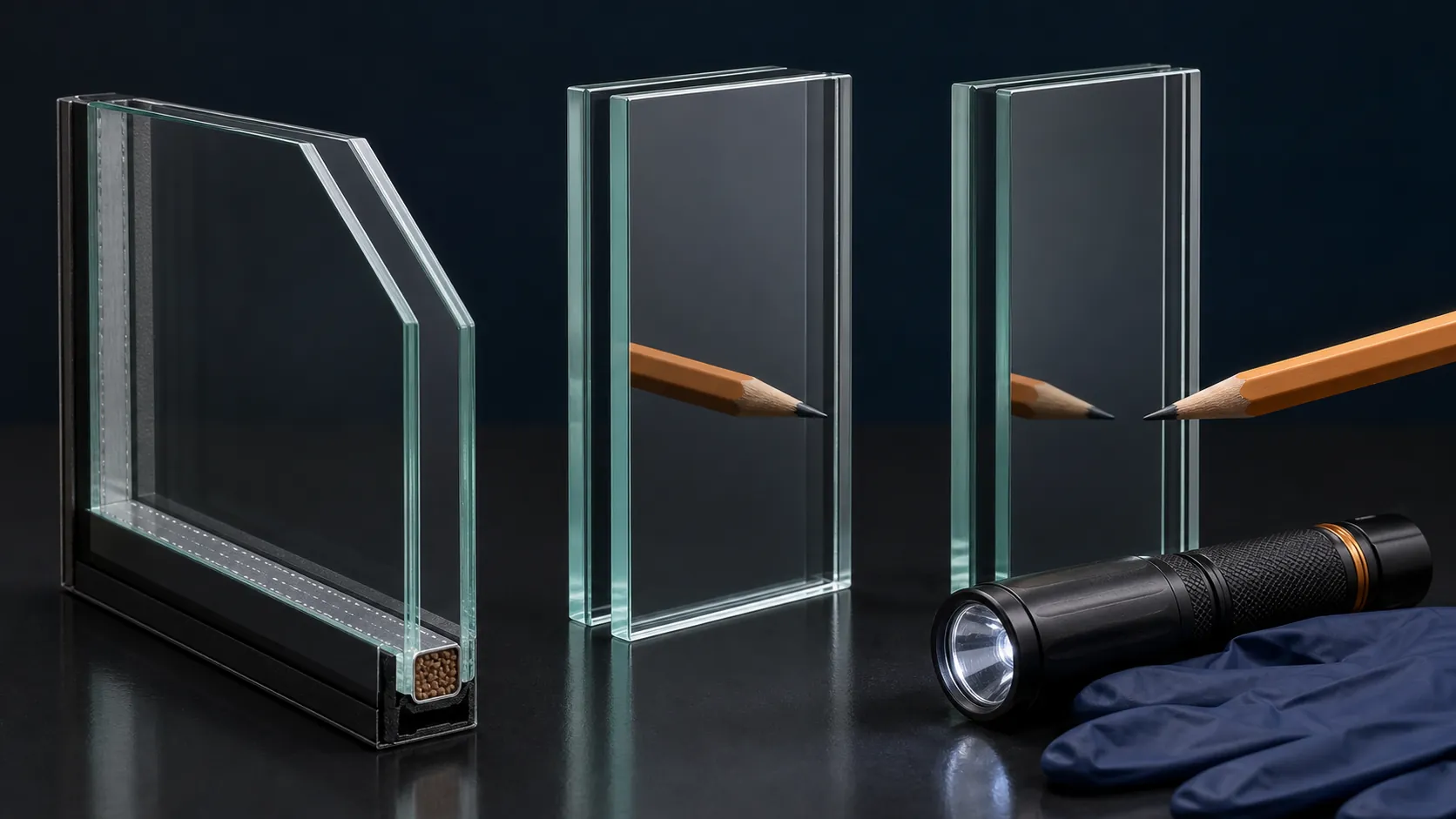
Number every surface from outside to inside
Architectural-glass surfaces are commonly counted from the exterior toward the occupied space. A monolithic lite has two faces. A conventional double-pane insulating unit has four: exterior face, cavity face of the outer lite, cavity face of the inner lite, and room-side face. Laminated plies and more complex assemblies add detail that should be described from the project documents rather than guessed.
Make a sketch for the exact opening. Mark exterior, interior, pane count, spacer, laminated components, frit, film, tint, and the face you can touch. Then write the coating designation and surface number next to the evidence that established it.
Use an evidence hierarchy
- Glass schedule, approved shop drawings, make-up tags, and replacement records.
- Fabricator or product identification tied to the opening.
- Manufacturer data for that exact glazing make-up.
- Field instruments and reflection observations used by a trained assessor.
- Appearance alone, used only to form questions.
A corner stamp may identify heat treatment or a fabricator, but it usually does not describe every coating or its location. A missing mark does not prove that the glass is uncoated. Replacement panes can also differ from the original elevation, so do not apply one opening's result to the whole building without checking.
What a reflection check can and cannot show
NGA guidance describes a simple point-to-glass observation for exposed reflective coatings. When a pencil point touches the glass, the relationship between the real point and its first reflection can help indicate whether the reflecting layer is at the touched surface or behind a thickness of glass.
This is supporting evidence. Multiple reflections, lamination, insulating units, dark surroundings, lighting angle, tint, and subtle neutral coatings can make the observation ambiguous. The test does not name the coating, establish its durability, or authorize a blade or polishing compound. Record the observation and reconcile it with the make-up documents.
Low-E is not one surface recipe
Low-emissivity coatings reduce radiative heat transfer, but products differ in deposition process, layer stack, intended surface, exposure, edge deletion, handling, and cleaning limits. Many are protected inside an insulating unit. Some products have a coating on an exposed surface. Reflective solar-control products can likewise occupy different surfaces.
Do not use color neutrality as proof of bare glass. Some Low-E coatings are difficult to see. Strong visible reflectivity can suggest a reflective layer, yet it still does not identify chemistry or face with enough certainty for restoration.
Separate four kinds of visible damage
| Observation | Possible location | Restoration implication |
|---|---|---|
| A scratch catches a light reflection on the exposed bare-glass face | Glass substrate | A controlled glass-restoration test may be possible after full identification |
| Color or reflectance changes along a wipe or blade path | Exposed coating | Stop; further abrasion can enlarge coating loss |
| Mark appears behind the accessible face | Cavity surface, inner ply, film, or opposite face | Surface polishing at the worker's side will not reach it |
| Clouding follows a seal edge or sits between panes | Insulating unit, edge, or internal surface | Refer for glazing-system diagnosis |
Use dry raking light and normal daylight. Inspect from both sides when access is safe. A white background can make transmitted color easier to compare; a dark background can emphasize reflection. Keep viewing conditions consistent across the test and reference pane.
Cleaning rules before any defect test
Begin with the manufacturer's routine-cleaning procedure. Use clean water, approved mild detergent, soft non-abrasive tools, and clean lint-free detailing materials. Avoid hot glass and direct sun when the product guidance warns against them.
NGA's architectural-glass cleaning paper states that razor blades should never be used on coated glass surfaces. Metal contact, abrasive pads, polishing cerium, acids, alkalis, and solvents can all be consequential depending on the coating. A discreet test is not permission to use a product the manufacturer prohibits.
A restoration go or no-go record
Before bringing abrasive equipment to the opening, require a written record of:
- opening and pane identification;
- complete glazing make-up and exposed surface;
- coating designation, surface number, and manufacturer source;
- existing scratches, color changes, haze, seal condition, and edge damage;
- approved cleaning method and prohibited tools or chemistry;
- the exact defect location relative to the coating;
- test-panel location, viewing conditions, and acceptance criteria.
If the exposed face is coated and the proposed correction would remove that layer, ordinary glass polishing is a no-go. Possible next steps may include acceptance, manufacturer consultation, specialized coating evaluation, film work, or replacement. They are not interchangeable with substrate restoration.
Do not mistake coating loss for a polished finish
An abrasive may make a small area appear clear because it has removed both the mark and the functional layer. Compare reflectance and color across a wide angle after the area is dry. Examine the opposite side and an unaffected reference lite. A locally clearer patch can be evidence of damage rather than success.
A professional glass-restoration assessment should be willing to stop at identification. Saving a pane is valuable only when the process preserves the performance and appearance that made it the specified pane.