Masonry runoff on glass: cement, salts, sealer, and acid damage
Separate mortar and concrete residue, efflorescence, sealers, silicone, metal runoff, and acid-altered glass, then stop the source and choose routine cleaning, controlled restoration, or replacement.
White runoff is not one material
A pale streak beneath brickwork may be dissolved salts. A hard raised spot may be mortar. A cloudy fan can come from masonry cleaner, concrete leachate, sealer, or an altered glass surface. Several can occupy the same pane after construction or facade cleaning.
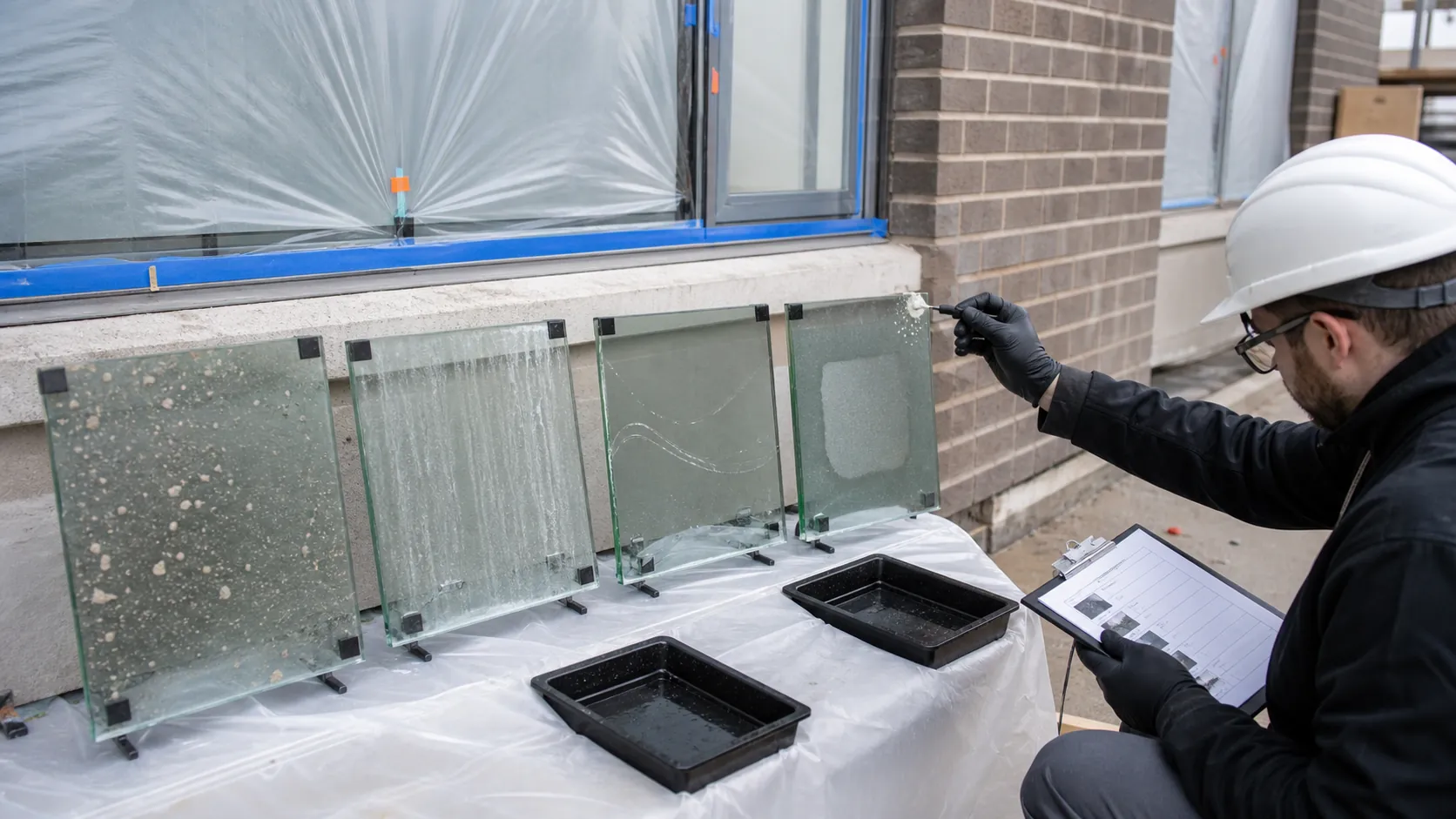
The first task is not choosing a stronger cleaner. Stop the source, identify the glass and adjacent materials, preserve evidence, and decide whether the visible condition is still on the surface.
Control the masonry operation
Coordinate brick, concrete, stucco, grout, sealant, coating, and facade-cleaning work before it reaches glazing. Protect glass and frames with a compatible system installed and removed under the product instructions. Keep wash water, slurry, dust, weld material, and leachate away from uncovered windows.
Inspect protection after wind, rain, trade access, and every cleaning shift. A torn film or open lower edge can funnel concentrated runoff behind the barrier. Temporary film left beyond its removal date may create another residue problem.
Map the source and the path
Number the pane and photograph the entire elevation. Follow each streak upward. Record masonry type, mortar and grout, admixtures, cure stage, cleaner, dilution, dwell, pressure, rinse direction, sealer, water source, metal components, and dates. Ask for safety data and technical data sheets rather than relying on a bucket label or crew memory.
Compare protected and exposed panes, shaded and sunlit areas, top and bottom floors, and glass below a joint or sill. A pattern tied to one wash event is different from recurring deposits caused by a leak or sprinkler.
Classify the visible condition
| Condition | Field cues | Main risk |
|---|---|---|
| Mortar, cement, grout, or concrete splatter | Raised grains, crusts, drops, or smears that may contain hard aggregate | Dragging particles can scratch; alkaline material and prolonged contact can affect adjacent finishes |
| Efflorescence or salt-bearing runoff | Powder, crystals, white tide line, or repeated path from porous masonry | The deposit may recur until moisture movement is corrected |
| Sealer, curing compound, or water repellent | Glossy droplets, oily-looking film, sharp overspray edge, or water-beading difference | Solvent or removal method may attack coatings, films, seals, or frames |
| Silicone or sealant transfer | Smear, fingerprint, bead, or hazy wipe near joints and tool paths | Aggressive solvent or abrasive work can spread residue or alter the glass |
| Metal-bearing runoff | Orange, brown, green, black, or iridescent streak below metal or fasteners | Source corrosion and glass staining need separate treatment |
| Acid-altered glass or coating | Dull patch, etched drip, color shift, loss of reflection, or changed texture after residue is gone | The surface itself may be permanently changed |
Efflorescence describes salts moving from porous material and crystallizing as moisture evaporates. A white glass stain near masonry may contain those salts, but color alone does not prove the source. Sample analysis may be justified when the restoration area or liability is large.
Identify the glazing before testing
Record whether the lite is monolithic, laminated, or insulating; annealed, heat-strengthened, or tempered; clear, tinted, fritted, patterned, or spandrel; and whether a functional coating or applied film is exposed. Check frame finish, gaskets, sealants, setting system, and laminated edges.
A process tolerated by uncoated monolithic glass can ruin an exposed low-emissivity coating, decorative etch, plastic glazing, ceramic pattern, film, or anodized frame. Test each distinct construction and background, not one convenient window for an entire building.
Begin with the least aggressive reveal
NGA's architectural-glass cleaning procedure starts with clean water, a mild non-abrasive glass cleaner, generous wetting, and non-abrasive tools. Keep particles flooded and lift them rather than dragging them. Change water, sleeves, and cloths when they collect gritty material.
Examine the dry test under daylight and low-angle light. If routine cleaning removes the deposit and leaves no alteration, document the process and repeat only on matching conditions. If a hard particle remains, do not increase scraping force without a product-specific non-routine plan.
Acid is not a universal masonry-stain answer
NGA states that glass-cleaning solutions should not include acids, especially muriatic or hydrochloric acid and hydrofluoric acid. Hydrofluoric acid attacks glass itself. Other masonry acids can damage coatings, metal finishes, sealants, stone, and surrounding materials or create a permanently different optical patch.
Do not publish or improvise a universal acid ratio, dwell time, blade angle, or polishing sequence. When routine cleaning fails, involve the glass and coating supplier, masonry and chemical manufacturers, glazing contractor, restoration specialist, and owner. Define containment, compatibility, worker protection, wastewater, test size, acceptance, and responsibility before non-routine work.
Decide whether the problem is deposit or damage
After a controlled reveal, inspect whether the feature has height, catches light as topography, changes when wet, or remains as a dull or distorted region after all removable residue is gone. Use a fixed test boundary so the team can compare treated, untreated, and adjacent glass.
- Cleaning fits removable deposit that leaves the original surface intact.
- Restoration may fit mineral alteration, shallow etching, or scratches when a tested system can correct them without unacceptable optical change.
- Replacement may be the better route for exposed coating removal, deep acid etching, severe distortion, edge damage, cracks, or a repair that would remove too much material.
A clear wet pane can hide etching until it dries. Always make the decision on the dry test under the agreed inspection conditions.
Correct recurrence before production restoration
Repair leaking joints, redirect irrigation, change the masonry rinse route, protect glazing during future washes, manage sill drips, and resolve corroding metal. Restoration performed below an active source will receive the same deposit again.
The project record should preserve pane IDs, glass construction, contaminant hypothesis, product sheets, source event, photographs, test methods, dry results, optical review, approved process, runoff controls, and accepted residual condition. A professional glass-restoration plan distinguishes material sitting on the pane from material that already changed it.