Window cleaning in direct sun, summer heat, cold weather, and wind
Judge glass temperature, evaporation, worker exposure, footing, wind, access equipment, and product limits separately, then change the method, reschedule, or stop when the strictest limit controls.
The forecast is only the first reading
Weather changes both the cleaning result and the safety of reaching the glass. A calm 80°F morning can become a high-heat exposure on a dark roof or reflective facade. A modest wind at street level may be stronger around a corner, parapet, setback, or suspended platform. A pane in direct sun can be far warmer than the surrounding air.
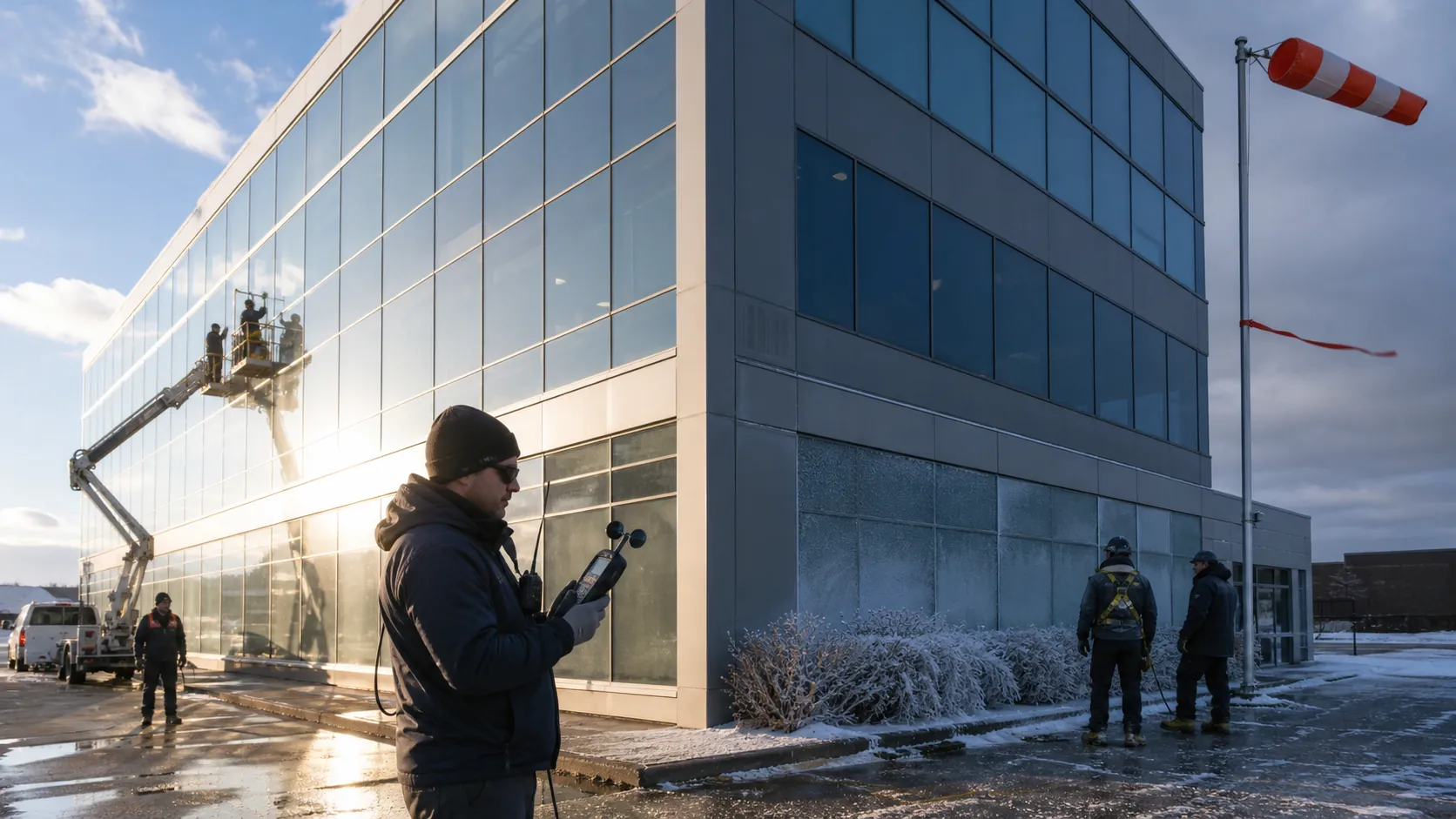
There is no responsible universal temperature or wind cutoff for every window-cleaning method. The glass manufacturer, chemical and equipment instructions, access-system limits, site conditions, and worker-protection plan all apply. When they set different limits, the strictest one controls.
Separate a quality problem from a safety limit
Fast evaporation may create streaks before the day becomes unsafe for workers. Wind can make spray drift unacceptable before it exceeds an access-equipment limit. Conversely, a pane may clean well while the roof, ladder footing, suspended equipment, or worker heat load has already become unacceptable.
| Condition | Early quality warning | Safety or property warning |
|---|---|---|
| Direct sun and hot glass | Solution flashes dry, edges bake on, residue appears | Thermal shock risk, hot frames, glare, worker heat exposure |
| High air temperature or humidity | Short working time, warm solution, rapid towel loading | Rising heat strain, reduced recovery, hot access surfaces |
| Cold | Slower chemistry, stiff rubber, water freezing at edges | Cold stress, numb hands, brittle components, ice on footing and public paths |
| Wind | Uneven wetting, overspray, rapid evaporation | Loss of pole or platform control, falling objects, chilled workers, chemical drift |
| Changing conditions | A method that worked on one elevation fails on another | Recorded morning assessment no longer represents the work face |
Write both kinds of limits into the plan. A crew should not be pushed past a safety stop because the glass still looks clean, or past a property-protection stop because the access equipment remains inside its rating.
Direct sun shortens the working window
Sunlight heats glass, frames, tools, and solution. Dark spandrel areas, tinted products, reflective coatings, and sheltered corners may respond differently from adjacent clear glass. Check the actual surface temperature when product instructions or the condition call for it. Do not infer it from air temperature.
Follow the glass and window manufacturer's restrictions. Some guidance advises avoiding direct sunlight on tinted or reflective surfaces. Never shock hot glass with cold water. Thermal stress depends on glass type, edge condition, shading pattern, temperature difference, and assembly details, so a single safe temperature difference should not be invented in the field.
When the work remains allowed, reduce section size, keep the surface uniformly wet for the approved contact time, and complete extraction before the solution dries. Move with the shade around the building. Use clean, cool solution within product limits and change it when contamination or heat makes results inconsistent. More detergent is not a cure for evaporation; it can leave more residue behind.
Heat exposure belongs in the work plan
OSHA identifies air temperature, humidity, radiant heat, air movement, workload, clothing, and worker factors as contributors to heat stress. A facade crew may receive radiant load from glass, metal, concrete, and roofing at the same time. New or returning workers also need acclimatization rather than immediate full exposure.
The employer's heat plan should define the chosen environmental measure, work and rest changes, shade or cooled recovery, drinking water, training, observation, emergency response, and how supervisors respond to symptoms. Headache, nausea, dizziness, confusion, unusual behavior, weakness, or loss of coordination are not issues to work through. Move the person to a cooler area and follow the emergency plan; heat stroke is an emergency.
Schedule high-exposure elevations earlier, rotate only in a way that truly reduces individual exposure, and account for the effort of moving water-fed poles or climbing access routes. Gloves, helmets, fall protection, and protective clothing can add heat load.
Cold affects hands, water, tools, and the ground
Cold-weather work is not just a question of whether solution freezes in the bucket. Wind chill affects exposed workers. Gloves can reduce dexterity. Rubber channels stiffen, hoses become less flexible, plastic parts may become brittle, and water can freeze in frame pockets, on roofs, at ladder feet, or across a public walkway.
OSHA warns about cold stress including hypothermia and frostbite. Use a cold-stress plan appropriate to temperature, wind, wetness, duration, clothing, workload, and worker condition. Provide warm dry recovery and replace wet clothing. Shivering, confusion, slurred speech, loss of coordination, numb pale skin, or waxy areas require prompt response under the plan.
Do not add an unapproved antifreeze, alcohol, or deicer to window-cleaning solution. It may be incompatible with glass coatings, seals, frames, tools, landscaping, or wastewater requirements. If water can freeze on the route, in the assembly, or after the crew leaves, change the method or postpone the work.
Wind changes with height and building shape
Observe flags, vegetation, spray, pole deflection, corner acceleration, rooftop turbulence, and conditions at the actual work height. Use an appropriate instrument when the access or site plan requires measured wind. Recheck after gust fronts, weather changes, or moving to another elevation.
Every access system has its own instructions and competent-person requirements. Suspended scaffolds, rope descent systems, mobile elevating work platforms, ladders, and water-fed poles do not share one wind number. Follow equipment ratings, anchorage and rescue plans, fall-protection requirements, and local rules.
- Stop when gusts compromise body, platform, ladder, or pole control.
- Secure tools and small parts against falling.
- Prevent overspray from reaching pedestrians, traffic, open windows, air intakes, electrical equipment, or adjacent property.
- Account for evaporative cooling and wet clothing even in moderate air temperatures.
- Do not use a worker's ability to hold on as the wind test.
Use a live decision record
At the start of the shift, record weather, work-face conditions, glass temperature where relevant, access surface, wind at the required location, sun and shade pattern, precipitation, and expected change. Note the applicable manufacturer or site limits. Assign who will recheck conditions and what triggers a pause.
A simple response ladder is practical:
- Proceed: conditions remain within every applicable limit and the trial section dries clean.
- Adapt: shorten sections, move to shade, change elevation, add runoff control, adjust work and rest, or use another approved access method.
- Pause and reassess: a reading, gust, symptom, ice patch, or changing front makes the original plan unreliable.
- Stop or reschedule: any product, equipment, worker, public-safety, or property-protection limit is exceeded.
Professional window cleaning is often a scheduling discipline. Moving one elevation by two hours can produce better glass with less exposure than trying to defeat direct sun, unstable wind, or freezing runoff with extra chemistry.