Storefront window maintenance: setting a practical cleaning frequency
Divide the storefront into exposure and use zones, define an appearance trigger, observe how quickly soil returns, and schedule touch service, routine glass cleaning, and periodic frame work separately.
The entrance and the transom do not get dirty on the same clock
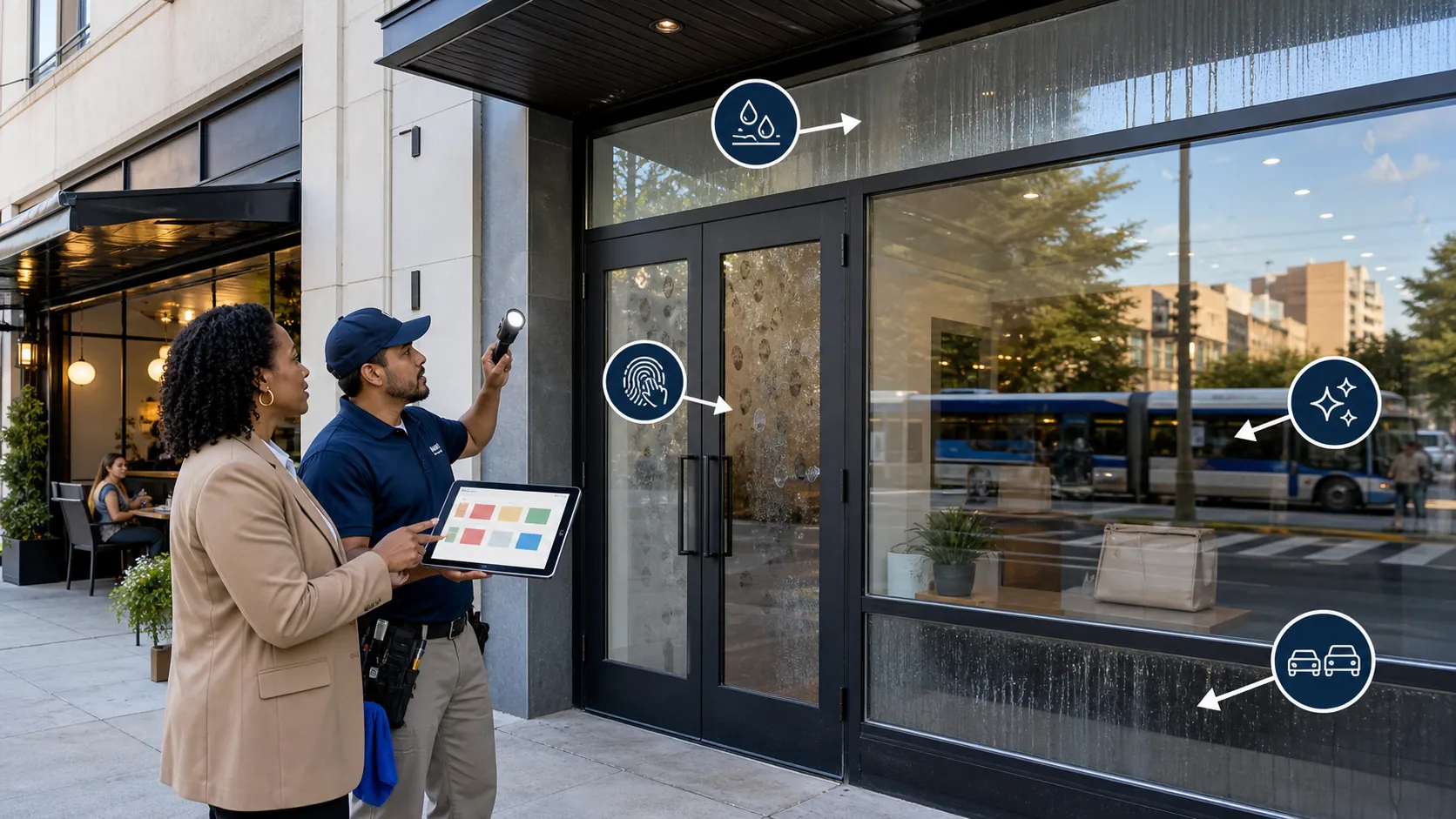
A storefront may have fingerprints on the door by noon, road film on lower display glass after several dry days, canopy drips after rain, and relatively clean upper panes for weeks. One frequency for the whole elevation either leaves the most visible areas dirty or pays to clean glass that has not reached the agreed condition.
NGA notes that twice-yearly cleaning is generally sufficient for many architectural-glass situations, while local environmental factors and pollutants may require more. A street-level retail entrance is often one of those higher-contact situations. The useful schedule comes from observation, manufacturer guidance, and the business's appearance standard, not from copying a generic number.
Divide the storefront into service zones
- Entrance touch zone: doors, sidelights, handles, push plates, and glass at hand and child height.
- Primary display zone: the main customer view, usually judged from sidewalk and interior sales floor.
- Lower exposure band: road spray, sidewalk splash, pets, carts, snow, salt, and irrigation.
- Upper glass and transoms: less contact, but vulnerable to drips from caps, signs, canopies, sealants, and facade joints.
- Interior zone: dust, merchandising fingerprints, cooking film, HVAC deposits, and display changes.
- Frames and doors: painted or anodized metal, tracks, thresholds, gaskets, hardware, and drainage paths.
Record access separately. A tall transom needing a pole or lift should not be added casually to every quick door visit. Conversely, a daily employee wipe should not substitute for a controlled full cleaning.
Define what clean enough means
Choose normal viewing positions and the times that matter. A restaurant may judge its entrance before lunch and dinner. A showroom may care about low morning sun. A store under nighttime lighting may reveal interior haze after sunset.
Use a simple trigger that can be seen and photographed: a certain number or density of fingerprints at the primary handle area, continuous road haze across the lower band, visible drips from normal sidewalk distance, or loss of display clarity under the usual lighting. Do not demand microscopic inspection of every pane unless the contract calls for it.
Observe one short cycle before locking the calendar
Start with a complete baseline cleaning, including the approved frame scope. Photograph the dry result. For the next several weeks, inspect the same zones on consistent days and after rain, snow, irrigation, deliveries, or construction. Record when each zone crosses its trigger.
| Observed return | Likely service response |
|---|---|
| Door prints return within one business day | Train staff for limited compatible touch removal and retain professional full-door service at the measured interval |
| Display glass reaches the trigger in one or two weeks | Set that as the routine exterior or two-sided glass cycle, then check seasonally |
| Lower traffic film returns faster than upper panes | Add a lower-band service instead of cleaning every transom equally often |
| Drips appear only after rain | Inspect canopy, cap, frame, and joint source; add event service only after correcting defects |
| Salt or irrigation spots build quickly | Increase fresh-water maintenance and correct spray or exposure where possible |
| Interior film returns near cooking or displays | Use a separate interior cycle and identify airborne source |
The table does not prescribe a universal interval. It shows how a measured return becomes a task instead of a guess.
Use three layers of service
Touch maintenance
Limited spot work handles fresh fingerprints and small drips on known compatible surfaces. Use clean dedicated tools and avoid spreading hand oil into a larger haze. Do not let untrained staff scrape labels, spray unknown cleaner across film, or soak door hardware.
Routine glass cleaning
This is the full wet, agitate, extract, edge-detail, and dry-inspect procedure for the defined panes and faces. It should include protection of merchandise, pedestrians, and entrances, plus a record of cracked glass, failed seals, coating concerns, or abnormal runoff.
Periodic assembly maintenance
Frames, tracks, thresholds, grilles, signs, canopies, and high transoms may follow a longer condition-based cycle. Identify the finish and control runoff. Kawneer cautions against abrasive materials, excessive rubbing, mixed cleaners, and strong products that reach adjacent aluminum or glass.
Adjust for the storefront's real exposures
- bus and truck routes, parking-lot spray, and nearby construction;
- coastal salt, winter road treatment, industrial particles, and agricultural dust;
- sprinklers, planters, trees, birds, awnings, ledges, and roof drains;
- restaurant grease, smoke, aerosol, and frequent door operation;
- sun angle, shade, wind tunnel effects, and rain shielding;
- holiday displays, vinyl graphics, temporary labels, and tenant improvements.
Andersen gives more frequent maintenance examples for coastal, industrial, or agricultural exposure on its own products. That illustrates the exposure principle, but its interval is not automatically the correct schedule for a different storefront system.
Keep cleaning and condition inspection distinct
A service visit may reveal a door that drags, loose closer, damaged threshold, blocked drainage, open sealant joint, impact chip, cracked lite, fogged insulating unit, or corroding frame. Cleaning personnel should document and route these conditions, not repair them without the proper scope and qualifications.
A recurring dirty streak often belongs to the building. Correcting a leaking canopy, misdirected sprinkler, corroding fastener, or sealant rundown can reduce cleaning frequency more effectively than adding visits.
Write a schedule that can change
List zones, faces, trigger, starting interval, service hours, access, exclusions, and who may request an event visit. Review after the first month, then at seasonal changes. Track cancellations and weather rather than assuming a missed service proves the interval was too short.
A practical storefront window-cleaning plan might combine frequent entrance touch service, a measured routine cycle for display panes, and less frequent frames or high glass. The important part is that each interval answers an observed condition.