Skylights and sloped glass: access, runoff, seals, and walking hazards
Treat skylights as openings, separate access from cleaning, protect against fall-through, work high to low, control runoff, inspect drainage and seals, and respect product limits.
A skylight is not a roof platform
Sloped glazing may look solid enough to step across, especially when framing divides it into short bays. Do not use that appearance as evidence of walking capacity. Treat skylights as openings and fall-through hazards unless a documented system specifically provides a walking surface. VELUX states plainly that standing on its skylights is forbidden.
Broken sloped glass can also fall away from its opening more readily than vertical glazing. Plan protection for the worker, occupants below, roof users, and any area where glass, water, soil, or a tool could land.
Identify the assembly before going to the roof
Collect drawings, manufacturer, product line, maintenance manual, glass make-up, coating location, venting or motor controls, fall-protection design, roof warranty, and prior leak history. Distinguish a factory skylight from a custom sloped curtain wall, canopy, roof monitor, walkable glass system, plastic dome, or smoke vent. They do not share one cleaning procedure.
Inspect from inside first when practical. Mark cracked panes, seal fog, staining, active leaks, damaged finishes, loose shades, condensation, and occupied areas. Interior evidence may show where exterior water must not be driven. Coordinate alarms, smoke-control devices, automatic rain sensors, blinds, and building automation.
Make powered units safe for maintenance
Follow the manufacturer's shutdown and isolation procedure for motorized skylights, vents, shades, and actuators. VELUX instructs users to disconnect mains or battery supply for maintenance and to prevent inadvertent reconnection. A wall switch in the off position may not isolate stored energy, remote commands, automatic sensors, or battery power.
Do not place fingers, cloths, lines, or tools in an opening mechanism until movement is controlled. Keep emergency smoke-vent and life-safety functions under the building's approved impairment and restoration procedure.
Choose access separately from the wash method
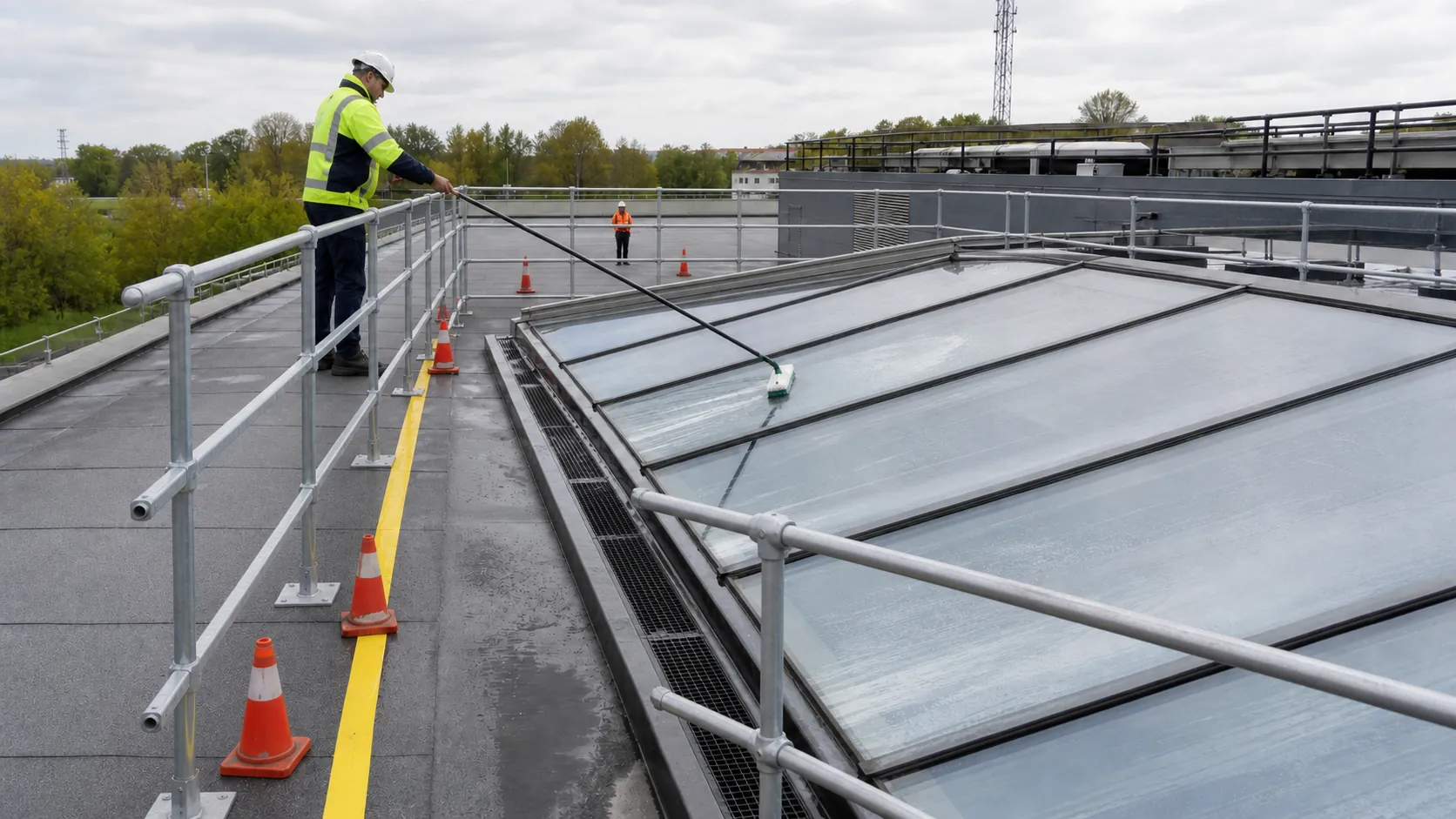
A soft brush on a long pole may suit the glass surface, yet the technician can still be exposed to an unprotected roof edge or skylight. Decide how people reach and remain at the work area first. Applicable controls may include a guarded walkway, rated cover, personal fall-protection system, elevating platform, scaffold, or another engineered approach.
The protective system must match the roof and task. Warning lines or cones alone do not turn a skylight into a protected opening. Never attach a line to a skylight frame, roof railing, pipe, mechanical curb, or convenient feature unless the qualified design and site program identify it for that use.
Establish three zones
| Zone | Controls |
|---|---|
| Roof approach and work path | Stable access, verified walking surface, edge and opening protection, dry route, hose control, weather limit, communication |
| Glazing and drainage field | Product-compatible tools, high-to-low sequence, controlled solution, clear channels, no foot or equipment load |
| Interior and ground below | Occupant exclusion, protection for finishes and equipment, leak watch, falling-object control, communication with roof crew |
Place hoses so they cannot pull across glass, catch a vent, undermine footing, or close a roof door. Tools need positive control near openings and edges. A bucket left on a slope can become a moving load.
Work from the high side and follow drainage
Start with the highest row so dirty water does not cross finished work. Remove loose debris with a method that will not scratch the product or push material under a flashing. Apply clean water and a mild non-abrasive cleaner approved for the assembly. Use a soft tool with enough reach to maintain position without leaning onto the glazing.
Rinse in the direction the system is designed to drain. Control volume around end dams, caps, gaskets, operable joints, and transitions to roofing. Do not direct a concentrated jet uphill under laps or into glazing pockets. If runoff enters a joint or appears inside, stop and document the path rather than adding more water to confirm it.
Clean drainage without altering it
Leaves, roof granules, sealant scraps, nesting material, and construction debris can block gutters and weep paths. Remove only material that is clearly foreign. Do not cut sealant, enlarge a weep, lift flashing, or disassemble a pressure cap as a cleaning shortcut.
Note ponding, corrosion, displaced covers, open fastener holes, split gaskets, cracked sealant, and stains beneath a joint. Cleaning can reveal a condition but does not authorize a glazing or roofing repair. Route defects to the responsible trade and product procedure.
Temperature changes both safety and finish
Sloped glass receives strong solar load and may have sharp shade boundaries. Avoid the hottest part of the day when the manufacturer recommends it, and do not flood hot glass with cold water. Heat also warms metal framing, softens some residues, dries solution quickly, and raises worker exposure on the roof.
Cold creates its own problems. Ice, frost, condensation, and rinse water can make the route unsafe and hide cracks or residue. Reschedule when the planned method cannot keep the approach and work position stable.
Do not generalize a blade exception
A manual for one product may permit a specific scraper under narrow conditions. That does not approve blades on another skylight, exposed coating, plastic glazing, applied film, frit, or heat-treated surface with fabrication debris. Identify the surface and follow its current care instruction. Test a small representative area before production.
Inspect dry from both sides
After the assembly drains and dries, inspect the glass from normal interior positions and from the safe exterior route. Look for residue at the lower edge, trapped water, new leakage, moved gasket, clogged channel, scratches, coating change, and tool contact at caps or frame corners. Restore power and automatic functions only through the approved procedure, then verify operation without anyone in the movement path.
The closeout record should identify product, panes, access system, weather, isolation, chemistry, tools, drainage observations, pre-existing defects, interior watch, and final functional check. A careful skylight-cleaning plan leaves the roof system working as designed, not merely the glass looking brighter.