Coated, tempered, laminated, tinted, and decorative glass
How to identify glazing surfaces, separate glass treatments from films and coatings, choose a conservative cleaning method, and know when the manufacturer must decide.
Start with the surface you can actually touch
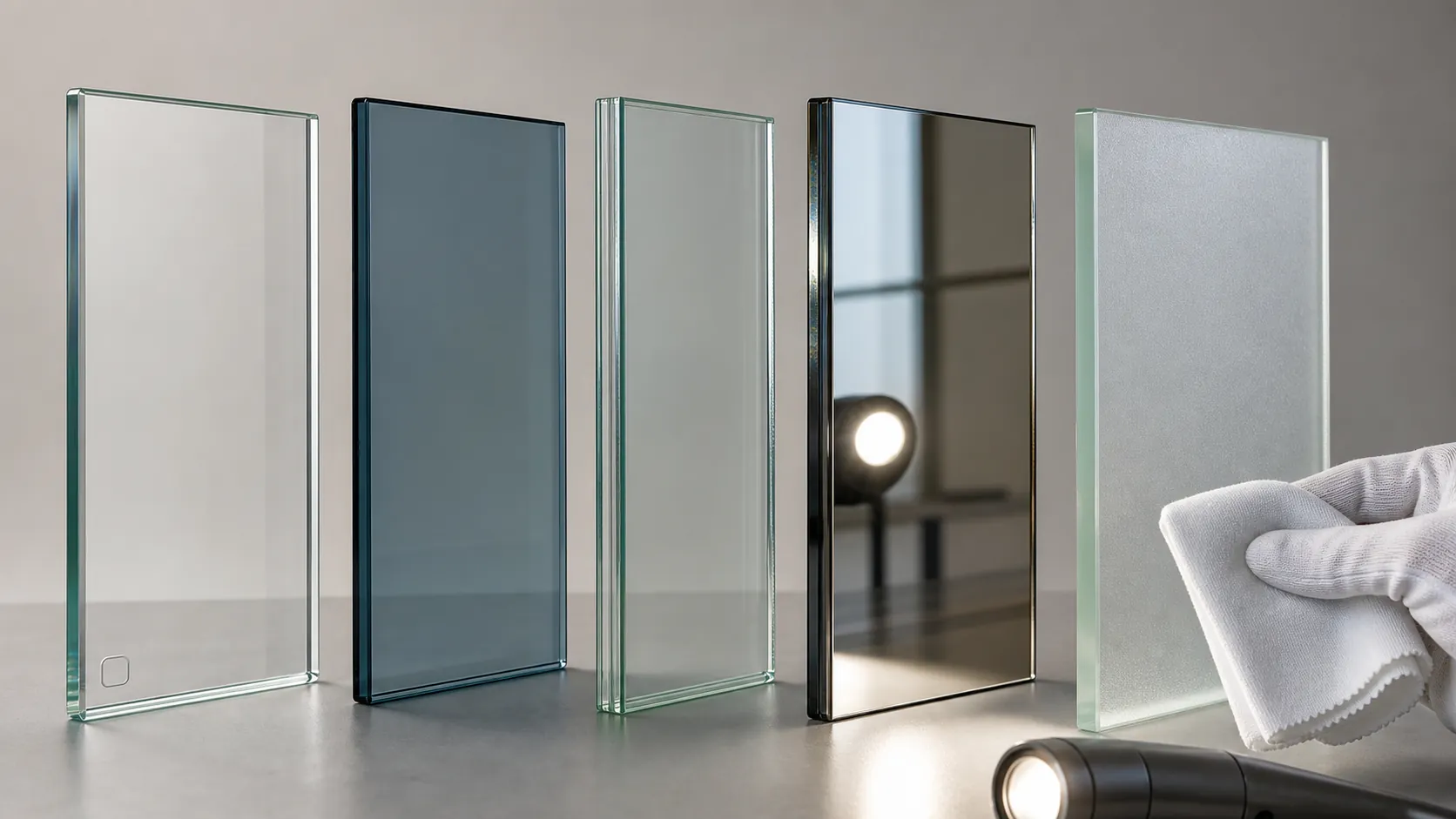
Words such as tempered, laminated, Low-E, tinted, fritted, and insulating describe different properties. More than one can apply to the same window. A pane might be heat-treated for safety, laminated for retention, tinted through the body, and assembled in an insulating unit with a coating on a protected interior surface. The cleaning decision concerns the exposed face, not the shortest label on a drawing.
Before selecting a pad, scraper, solvent, or detergent, identify the glazing make-up and which numbered surface faces the worker. On a typical insulating glass unit, surfaces are counted from the exterior toward the room. Coatings may be sealed inside the unit, but exposed coatings also exist. Do not infer location from color alone.
Build an identification record
Useful evidence includes corner bugs, permanent stamps, labels, glazing schedules, shop drawings, invoices, safety-film markings, and product data. Photograph each mark and record which side was viewed. Ask the building manager whether film or a surface treatment was installed after the original glazing.
Use a small sketch when the assembly is complex. Note exterior and interior, pane count, approximate surface locations, visible patterns, damaged areas, frame material, gasket condition, and any adjacent sealant. If the exposed face cannot be established, pause before abrasive or blade work and obtain the glazing manufacturer's instructions.
| Description | What it tells you | What it does not settle |
|---|---|---|
| Tempered or heat-strengthened | The pane received heat treatment that changes strength and break behavior | Whether the exposed face is scratch-proof, coated, filmed, or free of fabrication particles |
| Laminated | Two or more plies are bonded with an interlayer | Which cleaning tools are safe for an added film or special exposed coating |
| Body-tinted | Color is within the glass composition | Whether a separate coating or film is also present |
| Low-E | A low-emissivity coating is part of the assembly | Its exact surface, chemistry tolerance, or whether it is exposed |
| Ceramic frit | A fired ceramic pattern or coverage is applied to a glass surface | Whether that patterned face is accessible and how aggressively it may be scrubbed |
| Aftermarket film | A polymer layer has been adhered to a pane | Whether ordinary glass blades, ammonia products, or abrasive pads are compatible |
Clear annealed glass still needs a test
For known, uncoated clear glass in routine maintenance, begin with clean water and a compatible mild detergent. Flood loose soil, agitate with a clean non-abrasive applicator, squeegee, and detail edges with a clean lint-free cloth. Change water and tools when grit accumulates. Dry inspection matters because residue and fine scratching can hide while wet.
A metal scraper is not a default cleaning tool. Construction debris, sealant, paint, and mineral deposits call for contaminant-specific decisions. Establish glass type, coating status, manufacturer limits, blade condition, lubrication, direction, and a discreet test before any non-routine procedure.
Heat treatment does not define the exposed finish
Tempered glass is made to have different strength and fracture characteristics from annealed glass. That treatment does not turn its faces into a universally scratch-resistant material. Heat-treated surfaces can also present conditions related to fabrication and handling that make scraper use consequential. A hard particle caught under a blade can travel across the pane and produce a trail.
Use routine cleaning first. If bonded contamination remains, follow the glass fabricator's and project documents. Never conclude that a pane is safe for scraping only because a stamp says tempered.
Laminated glass requires attention at edges and added layers
The interlayer in laminated glass is normally between glass plies, but exposed edges, drilled openings, chips, or failed seals can create special concerns. Keep incompatible solvents and excessive liquid away from vulnerable edges. Do not insert blades into glazing pockets or scrape across a film whose identity is unknown.
Lamination and applied safety film are not synonyms. Film sits on an exposed face and has its own scratch, edge, adhesive, and chemical limits. Obtain the film maker's care instructions. A soft tool considered safe for bare glass may still haze or mark a film.
Tint can be in the glass, on the glass, or in a film
Body-tinted glass carries color through the substrate and is commonly cleaned according to the glass manufacturer's guidance. Reflective or solar-control coatings are surface layers. Aftermarket tint is a bonded film. All three may look dark from the sidewalk, but they do not accept the same solvent, pad, blade, or edge treatment.
Do not use an ammonia product on film unless its maker explicitly allows it. Avoid abrasive powders and rough pads on unknown reflective faces. When a dark pane becomes hot in direct sun, delay work if the cleaning product or manufacturer warns against hot-surface application.
Low-E coatings require a surface map
Many insulating units protect a Low-E coating inside the sealed cavity. Other glazing products can place a durable or special coating where it is exposed. The phrase Low-E therefore cannot supply one cleaning recipe. Determine the product, coating type, and surface number.
If the coating is exposed, use only approved detergents, tools, and methods. Some coated products prohibit metal contact, abrasive cleaners, strong acids or alkalis, and certain solvents. Damage may appear as color shift, haze, scratches, or lost coating and may not be correctable by glass polishing.
Decorative glass can hold soil differently
Ceramic frit is fused to glass, while acid-etched, sandblasted, patterned, and other decorative finishes create different textures and porosity. A textured face can retain lint, slurry, and detergent. Aggressive rubbing may create a visible change in sheen even when the glass beneath is intact.
Test both cleaning and drying in an inconspicuous area. Use fresh solution, soft non-abrasive tools, and the maker's procedure. Rinse thoroughly so detergent does not lodge in a textured surface. Do not apply a generic sealer or restoration compound without compatibility approval.
A conservative decision sequence
- Identify the pane, assembly, exposed face, and any applied film.
- Record existing scratches, haze, edge damage, coating loss, or seal failure in dry light.
- Read the glass, coating, film, and cleaner instructions.
- Remove loose grit with generous clean water.
- Test the mildest compatible chemistry and softest practical tool.
- Let the area dry and inspect it from normal viewing positions.
- Escalate only for a named contaminant and documented compatible method.
- Stop if color, gloss, drag, residue, or scratching changes unexpectedly.
When records are unavailable, unknown glass should receive a lower-risk maintenance method, not an improvised aggressive one. A professional window-cleaning plan can separate ordinary soil from conditions that need glass-fabricator, film-installer, or restoration input.