
Bird droppings, tree sap, pollen, and insect residue: a safe removal order
Match the response to the exposure, keep dried animal waste and abrasive pollen out of the air, soften bonded residue before lifting it, and use separate compatible tests for sap and insects.
Four organic-looking spots call for four different first moves
Dry pollen can hide sharp grit. Tree sap can smear into a wider adhesive film. An insect body can contain pigment and hard fragments. Bird waste can be both a bonded soil and an exposure concern. Attacking all four with the same dry towel grinds particles into the glass and spreads material across the frame.
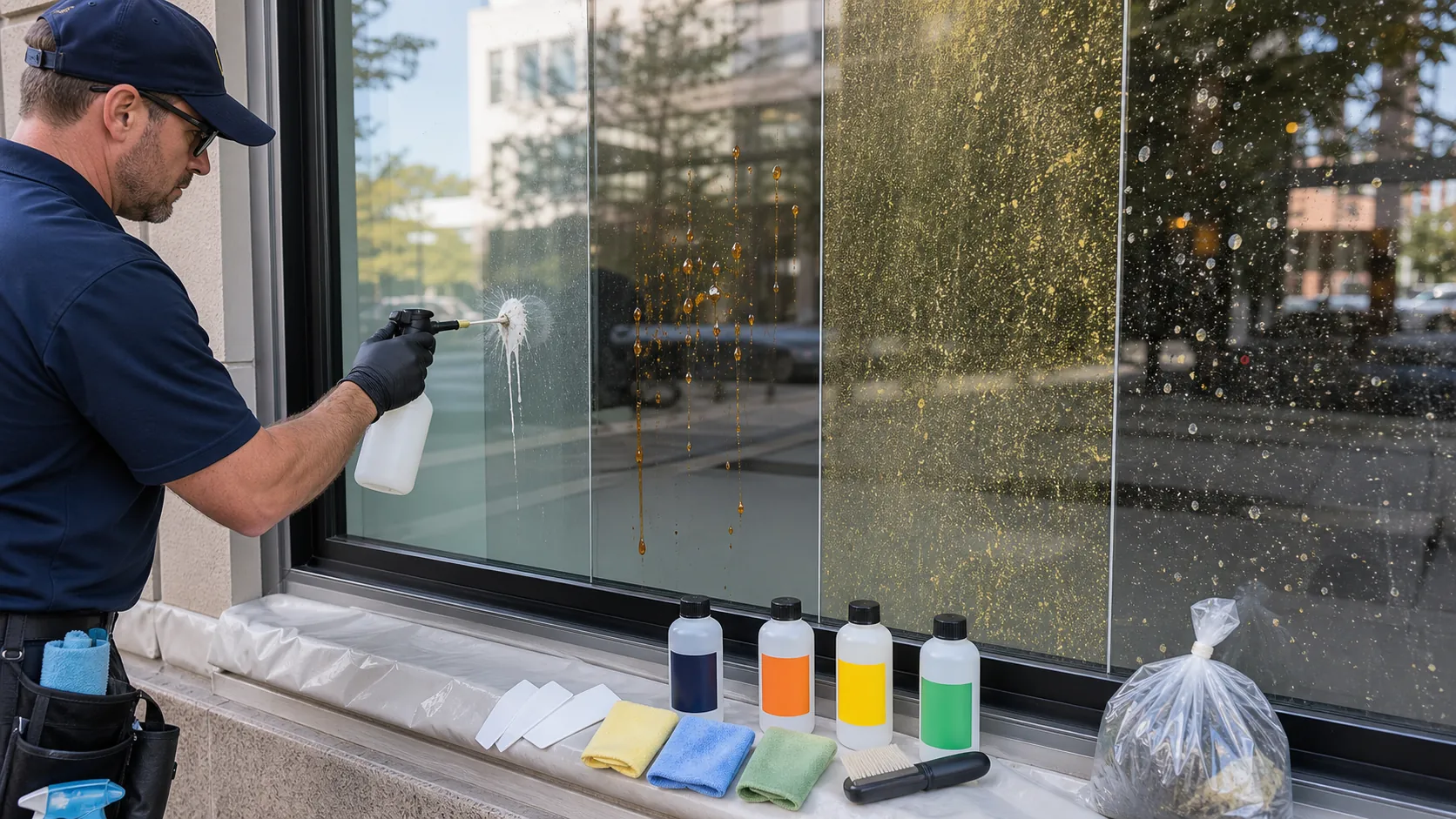
The order is simple in principle: assess exposure, contain the area, lift loose abrasive matter, soften bonded material, remove it with compatible tools, perform routine cleaning, and inspect dry. The details change with the amount and surface.
An isolated spot is not a roost cleanup
A few recent droppings on accessible exterior glass can usually be handled as a localized cleaning task with gloves, controlled wetting, waste containment, and hand hygiene. A dry accumulation under a bird or bat roost is a different job. Disturbance can put contaminated dust into the air and expose workers, occupants, air intakes, food areas, and the public.
CDC and NIOSH advise avoiding dry sweeping and dry disturbance of accumulated bird or bat waste. Large accumulations may require a specialist, site-specific exposure plan, controlled wet methods, respiratory protection program, restricted area, and regulated disposal. Suspected sick or dead birds add animal-health guidance. Do not use a pressure washer to turn a dry deposit into an aerosol.
Stop ordinary window work when waste covers a broad ledge, enters an HVAC intake, falls through occupied space, comes from an active roost, or cannot be reached without dispersal. Escalation is based on exposure, not how unpleasant the spot looks.
Prepare the pane and its surroundings
Identify the glass, exposed coating, frame finish, gasket, sealant, screen, film, and nearby porous material. Inspect scratches, chips, cracks, failed insulating-glass edges, and existing chemical haze. Close or protect air intakes where the building operator approves. Keep occupants away from the work zone.
Use dedicated gloves, disposable pickup material, a sealable waste container, clean water, mild compatible cleaner, soft applicator, plastic tools approved by the window manufacturer, and enough clean towels to change them often. Keep sap solvent tools away from bird-waste tools and finished frames.
Remove loose pollen and grit before rubbing
Pollen alone is fine and soft, but a yellow film often holds sand, soot, plant fragments, and insect parts. Lift loose matter with a gentle rinse, soft clean brush, or another method accepted for the assembly. Do not grind a dry washer or towel across it.
Work from cleaner upper areas toward controlled collection without flooding weep paths or interior finishes. If the glass has an exposed low-maintenance coating, follow its exact care instructions. An abrasive brush that seems harmless on ordinary glass can alter coating gloss.
Wet and lift an isolated bird spot
- Put on gloves and protect the sill and ground from drips.
- Apply enough compatible water or cleaning solution to wet the spot without atomizing it.
- Allow the material to soften. Keep it wet rather than scraping the dry crust.
- Lift bulk material with disposable pickup media or an accepted plastic tool, moving inward so the spot does not spread.
- Place waste directly into the container and change contaminated tools.
- Clean the local glass and frame with the window-approved procedure.
- Remove gloves correctly, wash hands, and clean reusable equipment away from food areas.
Disinfection is a separate decision from visible glass cleaning. If it is required by the exposure plan, use an EPA-registered product with a label that covers the target organism and surface, and confirm compatibility with glass coatings, metal, sealants, and occupant conditions. Never mix disinfectants or invent a dwell time.
Soften insect residue rather than shaving it dry
Prewet insect spots with mild compatible solution and give them time to release. A clean nonabrasive pad or plastic edge may lift the softened body where the product instructions allow it. Change the contact face frequently so hard fragments are not carried to the next spot.
If pigment remains, repeat the wet test before escalating. A metal blade may be prohibited by the window manufacturer or exposed coating. Even where a blade is accepted for verified bare glass, it needs lubrication, clean edges, controlled direction, and a representative scratch test.
Treat tree sap as a localized adhesive
Fresh sap may release after extended wetting with the routine solution. Aged sap can oxidize into a hard amber droplet and may need a manufacturer-approved adhesive or sap remover. Test a tiny area for coating, tint, frame paint, gasket, sealant, and film compatibility.
Apply only to the sap, observe the specified contact time, and collect dissolved material before it runs into the assembly. Do not combine solvents, use open flame, heat the glass locally, or flood an insulating-glass edge. Ventilate as the safety data sheet requires and control ignition sources.
Finish with one full compatible clean
After bulk residues and localized chemistry are gone, clean the full pane by the approved routine method. This removes surfactant, fingerprints, pollen shadows, and solvent traces that can masquerade as permanent haze. Rinse and dry frame, gasket, screen, and sill without blocking drainage.
Inspect under broad light and raking light. Classify what remains as residue, scratch, coating change, mineral, etched surface, sap stain on a porous frame, or condition between panes. A wet pane is not the final inspection.
Prevent the next difficult removal
Trim branches only with property approval and qualified tree care. Correct insect-attracting lights, standing water, food waste, and overflowing gutters where practical. Bird exclusion must be humane, lawful, compatible with the building, and designed so it does not trap animals or create a new roost over an entrance.
Inspect during pollen and insect seasons before residue bakes in sun. Frequency should respond to exposure. A pane below an active tree needs different attention from a sheltered upper-floor lite.