Pressure-washing runoff control
Map drains, inventory pollutants, reduce water, isolate storm inlets, build berms, recover with vacuum equipment, separate solids, confirm disposal authority, and inspect controls during the wash.
Runoff control begins before the first wet line
Pressure washing turns surface soil into wastewater. That water may carry sediment, detergent, biocide, oil, metal, paint, lead, food residue, animal waste, or material from the substrate. Once it reaches a curb inlet, recovery becomes harder and the discharge may already have entered a regulated system.
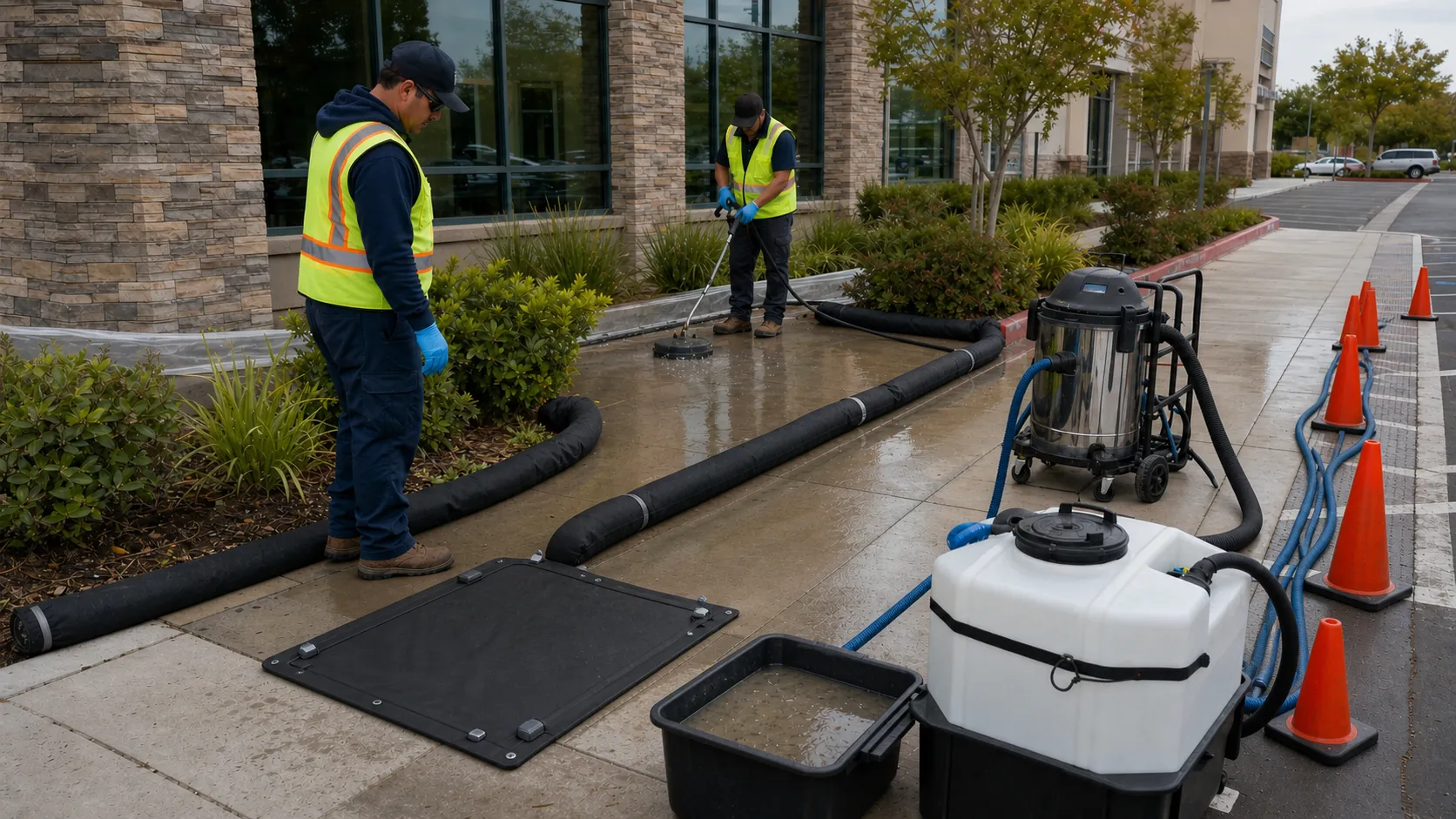
EPA explains that stormwater crossing hard surfaces can carry pollutants to storm drains and water bodies without passing through wastewater treatment. Local permits, ordinances, sewer rules, and site conditions determine the lawful route for each job.
Draw the drainage map on foot
Walk the entire wash area and every low point. Mark storm inlets, trench drains, floor drains, sanitary cleanouts, combined sewers, sumps, dry wells, swales, soil, landscape drains, downspouts, surface water, neighboring property, and unknown connections. Pouring test water into an unknown drain is not an identification method.
Use records, facility staff, utility or municipal information, and qualified tracing when needed. Note slope changes, cracked pavement, porous joints, curb openings, elevator pits, loading docks, and doors where water can escape the planned zone.
Inventory what the water can pick up
| Source | Possible wastewater load | Planning consequence |
|---|---|---|
| Sidewalk or building soil | Sediment, litter, gum, salts, cleaning chemistry, biological material | Dry removal, solids capture, compatible chemistry, authorized disposal |
| Parking and service areas | Oil, fuel, brake and tire material, metals, coolant, trash | Source isolation, absorbent cleanup, recovery and disposal based on contamination |
| Painted or coated surface | Paint chips, pigments, regulated metals, coating remover | Coating and lead assessment, containment, specialized waste handling |
| Roof or facade treatment | Biocide, detergent, oxidizer, organic growth, roof granules, metal runoff | Label compliance, vegetation protection, gutter and downspout control, recovery plan |
| Food or animal area | Grease, nutrients, pathogens, solids, detergent | Sanitation controls and approval from the receiving wastewater authority |
A clear-looking stream can contain dissolved chemistry. A filter bag or settling tank may remove grit while leaving detergent, salt, metal ions, or biocide in the water.
Reduce the load before adding water
Sweep, scrape, vacuum, pick up litter, absorb oil, remove gum through an approved controlled method, and repair active leaks before washing. Keep clean rainwater, irrigation, and roof drainage from entering the work zone. Less incoming water means smaller berms, longer recovery capacity, and less chance of overflow.
Use the lowest flow that still supports the approved cleaning process. Divide a large site into cells sized for the recovery equipment. Do not open the next cell until the current one has drained to the pickup point and its controls have been checked.
Build containment from the outside inward
- Separate pedestrians, vehicles, doors, and landscaping from the wash cell.
- Seal nearby storm inlets with compatible impermeable covers weighted against the actual surface.
- Place berms or weighted socks uphill of escape paths and around the active cell.
- Create a low collection point away from the covered inlet.
- Connect wet-vacuum or recovery equipment to a closed tank with enough working capacity.
- Keep backup power, hose, plugs, spill materials, and an empty reserve container ready.
A drain mat needs a clean contact surface and full perimeter seal. Texture, debris, slope, damaged pavement, or moving traffic can break that seal. Inspect beneath the edge without allowing water to escape.
Match recovery equipment to the flow
Estimate machine flow, trigger time, rinse volume, rain risk, tank capacity, vacuum performance, hose lift, solids loading, and travel time to disposal. A small wet vacuum may work for a short hand-washed entrance and fail instantly behind a high-flow surface cleaner.
Keep the pickup head at the lowest contained point and watch for loss of suction, foam, clogged hose, full tank, power interruption, or a berm that starts to float. If recovery cannot stay ahead of production, stop spraying. Do not rely on a worker to chase moving water with a vacuum after it crosses the boundary.
Separate solids without inventing permission
Screening, settling, oil-water separation, carbon, or another treatment stage may be appropriate for a characterized waste stream. Each stage has a defined purpose and spent material that also needs disposal. Test or documentation may be required before discharge.
Permission to discharge to a sanitary sewer comes from the receiving authority and may include limits, pretreatment, sampling, time, location, and volume. A sanitary cleanout on the property is not automatic authorization. Storm inlets and surface waters should not receive wash water unless a specific applicable authorization says otherwise.
Lead and other regulated debris change the job
EPA's RRP guidance requires pressure-washing containment to prevent dust, debris, and wastewater from leaving the work area when the rule applies. Maintain emergency egress and the integrity of plastic or other impermeable containment. Collect chips and solids without allowing them to wash beneath the barrier.
Unknown coatings, asbestos-containing material, hazardous residues, industrial process contamination, and spill cleanup may require assessment and a specialized contractor before washing. Runoff equipment does not turn an unidentified hazardous-material disturbance into routine maintenance.
Inspect controls while water is moving
Assign a worker to watch downstream boundaries, drain covers, berms, tank level, vacuum sound, hoses, vegetation, and public routes. Check again when the surface cleaner changes direction, the hose crosses a berm, a vehicle moves, wind shifts spray, or the grade changes.
Set stop triggers: water within a defined distance of the boundary, lifted drain-cover edge, failed suction, tank high level, unexpected color or odor, visible oil sheen, rainfall, uncontrolled pedestrian entry, or material not listed in the plan. Stop the source first, then reinforce and recover.
Close the cell dry
Recover standing water, remove remaining solids, inspect drain covers before lifting, and clean containment equipment inside another controlled area. Do not tip the residue captured in a filter or settling bin back onto the pavement. Restore drains only after the surrounding surface is dry enough that remaining material cannot wash into them.
Record the site map, pollutants, products, water volume, controls, inspections, recovered volume, treatment, transporter or receiving location, authorization, solid waste, incidents, and photographs. A professional power-washing plan can account for the water after it leaves the nozzle.