Gas pressure-washer engines: checks and maintenance
A model-specific workflow for daily inspection, engine oil, air filtration, fuel, spark plugs, cooling, shutdown, storage, and maintenance records.
Find the engine manual, not only the washer manual
A pressure washer combines at least two machines: an engine and a high-pressure water system. The washer model identifies the frame, pump, unloader, hose, and accessories. The engine has its own model, type, and serial information that determines oil, air-cleaner construction, spark plug, service intervals, fuel procedure, controls, and storage steps.
Honda specifically directs owners of engines installed on other equipment to use the full engine model when locating a manual. The same discipline applies to other manufacturers. A label such as "commercial engine" is not enough to order a filter or choose a maintenance interval.
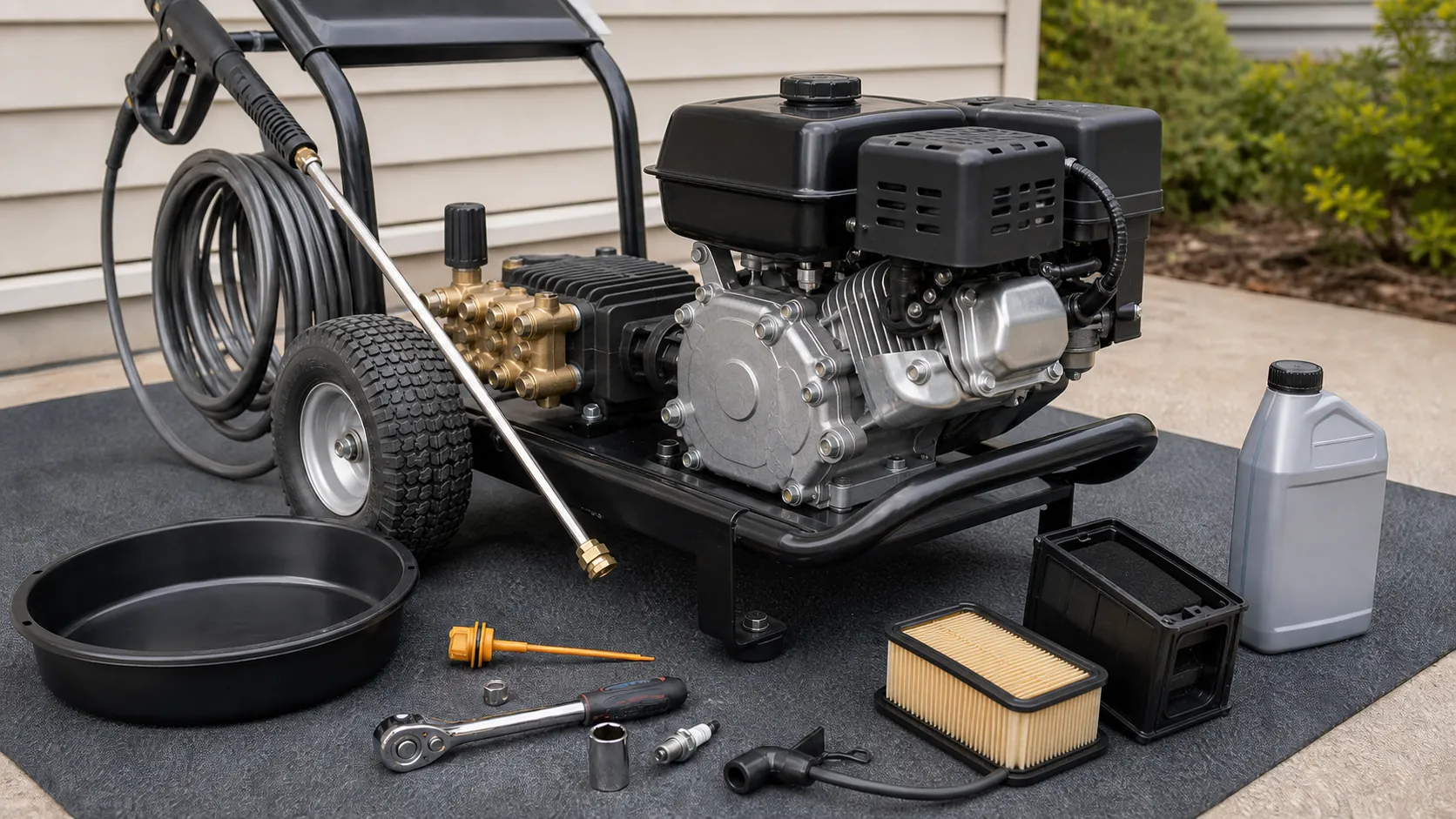
Build a three-document equipment record
- Pressure-washer manual: frame, start and stop sequence, hose, gun, nozzle, safety devices, and complete machine ratings.
- Engine manual: oil, fuel, air cleaner, spark plug, cooling, controls, maintenance schedule, and storage.
- Pump and unloader manual: water inlet, lubrication where applicable, nozzle sizing, bypass, freeze protection, and service.
Record model and serial numbers before labels become dirty or damaged. Keep current manuals with the maintenance log, parts receipts, oil type used, meter hours, and the reason for any early service.
A pre-use check takes place with the engine off
- Place the machine on stable, level ground outdoors.
- Inspect for gasoline, oil, and water leaks before starting.
- Check engine oil using the exact dipstick or filler-neck procedure in the engine manual.
- Confirm that the air-cleaner cover is secure and its inlet is not blocked.
- Look for loose fasteners, damaged guards, debris around cooling-air openings, and contact between hot exhaust parts and hoses.
- Inspect fuel condition, cap, tank, line, shutoff valve, and surrounding area.
- Complete the separate water-side inspection before running the pump.
A low-oil shutdown system is a backup, not a replacement for checking the level. Some engines stop at low oil while others may not have that feature, and operating on a slope can affect both lubrication and the sensor.
Engine oil: condition, level, and the correct procedure
Small horizontal-shaft engines may use a dipstick that rests on the threads for measurement, screws in for measurement, or share a filler opening with a level point. The manual defines the method. Mixing procedures can produce an overfill or underfill even when the dipstick appears marked correctly.
Check on level ground with the engine stopped and at the condition specified by the manufacturer. Keep dirt from the filler opening. Use the viscosity and service classification allowed for the ambient temperature and model. Do not add above the upper limit. Excess oil can create smoke, fouling, leakage, or crankcase pressure problems, while low oil reduces lubrication and cooling.
Change oil at the initial and recurring intervals in the schedule, with shorter service where the manual defines severe, dusty, hot, or sustained operation. Warm oil may drain more completely, but hot oil and engine parts can burn. Stop the engine, secure it, and follow the manual's drain location, washer, torque, refill quantity, and disposal guidance.
The air cleaner protects the engine from the jobsite
Pressure washing takes place around soil, pollen, masonry dust, traffic residue, and spray mist. A restricted filter can reduce power and increase fuel use. A damaged or incorrectly assembled filter can pass abrasive dust into the engine.
Identify whether the model uses paper, foam, dual elements, an oil-bath design, or another arrangement. Do not wash a paper element unless the manufacturer says it is washable. Do not oil an element that is intended to stay dry. Clean the housing without dropping dirt into the intake and reinstall seals and covers in the correct order.
| Filter observation | Response |
|---|---|
| Loose surface dust on a serviceable element | Use only the manual's cleaning method and inspect for damage |
| Oil-soaked, torn, hardened, or deformed material | Replace with the correct part and investigate the source |
| Dust downstream of the filter | Stop and inspect element fit, seals, housing, and engine intake |
| Repeated early restriction | Review jobsite placement, wind, exhaust recirculation, and the severe-service schedule |
Fuel maintenance is storage maintenance
Use the fuel type and ethanol limit stated in the engine manual. Buy an amount that can be managed within the manufacturer's storage guidance. Heat, time, venting, water, and incompatible containers change fuel quality.
Refuel only with the engine stopped and cooled as directed, away from ignition sources. Do not fill over the prescribed level. Wipe spills and move the machine from the spill area before starting. Fuel odor, a wet carburetor, a swollen hose, or leakage at the tank is a stop condition.
For storage, the correct choice may be draining the carburetor and tank, using an approved stabilizer with fresh fuel, operating the engine to distribute treated fuel, or another model-specific procedure. Closing the fuel valve alone does not remove fuel already inside a carburetor bowl.
Spark plug and ignition
The manual identifies plug type, inspection interval, gap, and torque. A plug that fits the threads may still have the wrong reach or heat range. Clean around the plug before removal so debris does not enter the cylinder.
Inspect the insulator, electrode wear, deposits, and sealing washer according to the manual. Start by hand to avoid cross-threading, then tighten by the specified method. A loose plug can overheat and damage threads; excessive torque can damage the head.
Disconnecting the spark-plug cap helps prevent unintended starting during suitable service, but it does not make hot parts, stored pressure, gasoline, or a moving machine safe. Release water pressure and secure all energy sources separately.
Cooling air and exhaust need open space
An air-cooled engine depends on clean intake screens, shrouds, and fins. Grass, plastic, oily dust, and wash debris can restrict airflow. Clean only with the engine stopped and cool, using the procedure allowed by the manufacturer. Do not remove a shroud or guard and return the machine to service without it.
Exhaust heat can damage a high-pressure hose placed against the muffler. Route water and chemical lines away from the exhaust and cylinder head. Inspect the muffler, spark arrester where fitted, and surrounding shield at the scheduled interval.
Carbon monoxide is odorless and can kill. The CDC states that gasoline engines must remain outdoors, away from doors, windows, and vents. An open garage door does not make indoor operation safe.
Start and stop with the pump in mind
Before starting, connect an adequate clean water supply, inspect the inlet filter, turn on water, and purge air as the washer manual directs. Starting an engine with a dry pump can damage the water system even if the engine is fully maintained.
During operation, listen for changing speed, knocking, hunting, exhaust change, and abnormal vibration. Stop for an oil or fuel leak, loss of power, blocked cooling, damaged control, or contact between hot parts and a hose.
Use the prescribed cool-down and shutdown order. Close fuel where required, turn off water after the machine is stopped, release trapped pressure, and protect the pump from freezing. Do not leave the gun closed with the engine running longer than the unloader and pump allow because bypass water can heat rapidly.
A practical maintenance log
| Record | Why it matters |
|---|---|
| Date and engine hours | Anchors calendar and hour-based intervals |
| Work conditions | Explains early filter or oil service under dust, heat, or long runs |
| Oil type and amount | Prevents mixing assumptions and documents consumption |
| Filter and plug part numbers | Confirms that service parts match the engine model |
| Observed leaks, smoke, noise, or power change | Shows a trend before a roadside failure |
| Pump and nozzle service performed at the same visit | Keeps engine complaints from masking water-side restrictions |
Reliable power-washing equipment comes from maintaining the engine and water system as connected but distinct assemblies. A new spark plug will not correct a starved pump, and an unloader adjustment will not correct a restricted air filter.