
Winter window cleaning: freezing points, ice, and stop-work limits
Evaluate solution behavior, glass temperature, drainage, walking surfaces, equipment, and cold stress separately, then stop before runoff or lost dexterity turns cleaning into a fall hazard.
The first freeze is often underfoot
A bucket can stay liquid while runoff freezes on a shaded sill, metal frame, ladder foot, hose, or sidewalk. That is why a winter window-cleaning decision cannot come from air temperature alone. The technician has to control the solution, the glass, the access route, the drainage path, and cold exposure at the same time.
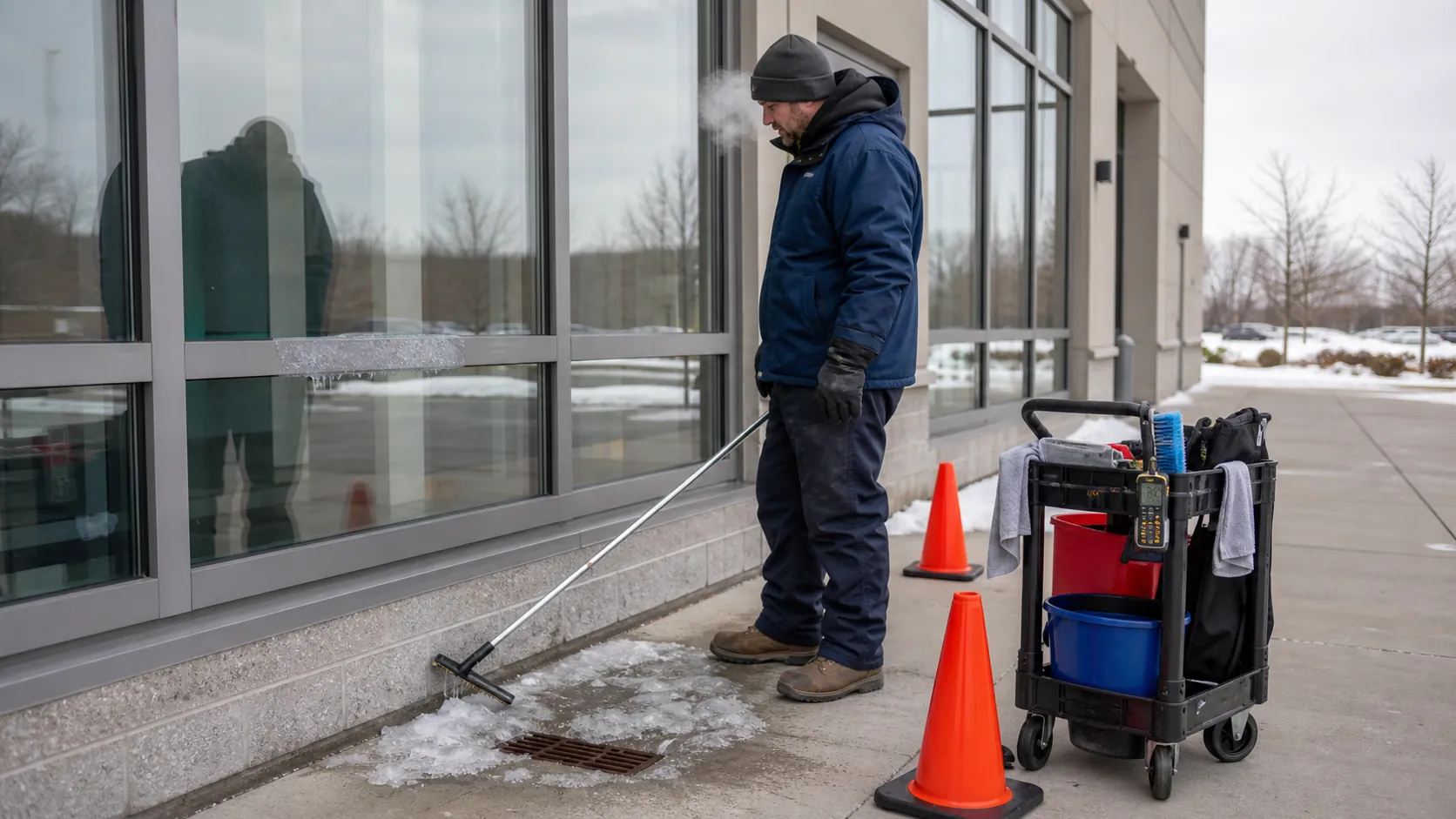
A chemical that lowers a liquid's freezing point does not make the resulting job safe. It may be incompatible with seals, coatings, frames, landscaping, wastewater rules, or the product label. It also does nothing for ice that already exists along the work route.
Check five separate conditions
| Condition | What to verify | Reason to stop |
|---|---|---|
| Cleaning solution | Exact product, dilution, label temperature range, and behavior in the current container | Crystals, slush, separation, loss of flow, or use outside the label |
| Glass and assembly | Surface temperature, glass type, coatings, frame, gaskets, drainage, and existing ice | Frozen edges, blocked weeps, rapid temperature difference, or uncertain specialty glass |
| Access and ground | Walking route, ladder or platform footing, overhead ice, hose routing, and public traffic | Any surface that cannot be cleared, isolated, and kept slip resistant |
| Worker | Warmth, dexterity, footwear, wind exposure, breaks, communication, and cold-stress symptoms | Numb hands, shivering that affects work, confusion, fatigue, or inadequate clothing |
| Equipment and runoff | Pumps, poles, hoses, electrical protection, drains, catchment, and thaw plan | Frozen controls, stiff or damaged hoses, uncontrolled water, or refreezing after departure |
There is no universal cutoff temperature
Water freezes at a familiar reference point, but a working solution may contain detergent, dissolved minerals, or a manufacturer-approved additive. Its actual freezing behavior depends on composition and concentration. Surface temperatures can also differ from the weather report. A shaded metal frame may remain below freezing after nearby air warms, while sun can heat one part of a pane faster than another.
Use a reliable thermometer for air and representative surface readings. Match the cleaning product to its label and safety data sheet. A field mixture copied from another crew is not a specification. Automotive washer fluid, fuel alcohol, windshield deicer, salt, and household antifreeze are not general-purpose architectural-glass cleaners.
Avoid the hot-water shortcut
Very warm water feels efficient when glass is cold, but the temperature difference can impose thermal stress. The risk depends on glass type, edge condition, shade, framing, existing damage, and how unevenly the heat reaches the pane. Warm liquid can also run onto a colder edge and freeze moments later.
Use the temperature range accepted by the glass, frame, and cleaner manufacturers. If that information is unavailable, do not improvise with a large temperature jump. Existing cracks, edge damage, insulated-unit distress, films, coatings, and unknown specialty glazing deserve a separate assessment before wet work.
Prepare the site before opening the water
- Walk the entire route and remove snow or ice. Confirm that cleared areas will not receive new runoff.
- Inspect upper ledges, signs, gutters, and facade projections for falling ice.
- Identify where every rinse will go. Protect entrances, ramps, steps, loading areas, landscaping, and public paths.
- Set barriers before a hose crosses a route. Keep hose loops out of traffic and away from sharp frozen edges.
- Test a small low-risk pane and its drainage path. Watch the result long enough to see whether water refreezes.
- Assign warm-up breaks, communication, and a stop-work authority that does not depend on finishing a section.
OSHA advises employers to clear walking surfaces of snow and ice, use suitable footwear, and address cold stress. Those controls apply to the whole work area, including the conditions created by the cleaning itself.
Stop when control is lost
- water, solution, or slurry freezes on the pane, frame, tool, hose, ground, ladder, platform, or catchment;
- drains or weeps are blocked, or runoff reaches an area that cannot be isolated;
- wind affects balance, pole control, spray containment, or safe warmth;
- gloves no longer provide dexterity or grip;
- ice falls from above or forms where people may pass;
- the glass develops a crack sound, visible line, unusual movement, or a severe temperature gradient;
- the worker shows cold-stress symptoms or cannot take an effective warm break.
A stop is not a failed cleaning. It is the correct response when a planned control no longer works.
Leave the site safe after the last pane
Drain or protect equipment according to its manufacturer, remove collected water, and inspect the full route again. A damp area that was safe at noon may freeze after shade returns. Barriers should remain until the surface is dry or otherwise safe, not merely until the crew packs up.
Record air and surface temperatures, product and dilution, affected areas, observed refreezing, stop time, and any unfinished panes. That record makes the next visit more predictable and helps distinguish weather delay from a recurring drainage problem. For routine planning, see our window-cleaning service.