When not to pressure wash
Stop for unknown coatings, fragile roofing, damaged cladding, open joints, electrical exposure, active leaks, unsafe access, occupants, or uncontrolled wastewater, then choose a safer path.
The correct pressure can be zero
A washer can remove soil quickly and also move water, coating, aggregate, sealant, contaminants, and damaged building material into places they should not go. When the substrate or route is unknown, reducing pressure does not answer the underlying question. Stop the machine and identify the condition.
Walk the water path before starting
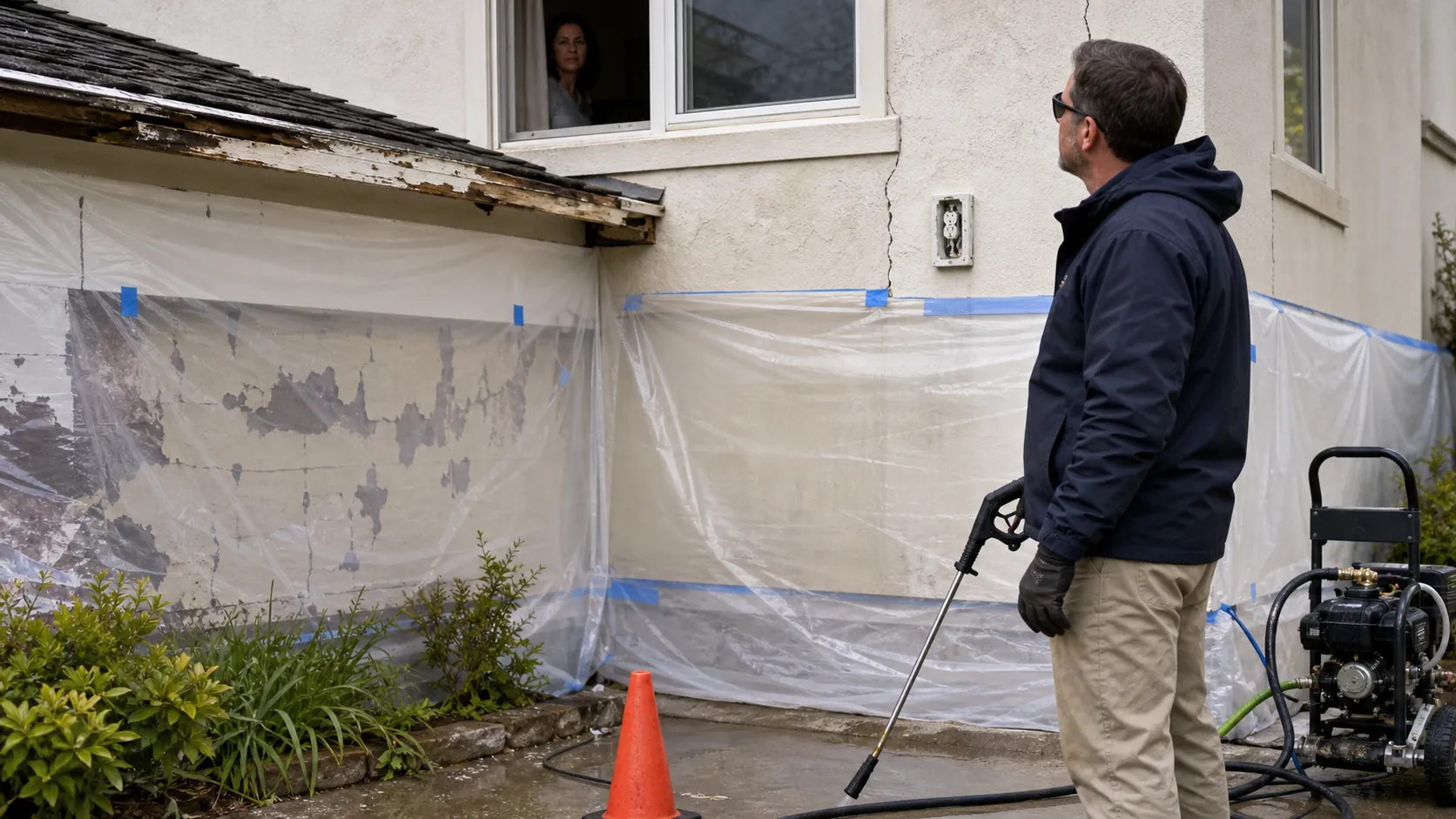
Trace where spray can enter, what it can dislodge, and where wastewater will travel. Inspect from roof edge to grade: shingles, flashing, vents, siding, joints, windows, doors, penetrations, electrical equipment, foundation openings, drains, landscaping, neighboring property, vehicles, and public routes.
Check the interior for active leaks, staining, open windows, sensitive finishes, occupants, electronics, and air intakes. Water that appears outside a joint can travel behind the cladding before anyone sees it indoors.
Stop for an unknown or deteriorated coating
Peeling, chalking, cracked, blistered, or powdering paint is not ordinary surface soil. Determine the coating, age, substrate, regulated-material risk, and project purpose before disturbing it. On housing and child-occupied facilities covered by the federal Renovation, Repair and Painting Rule, lead-safe requirements may apply.
EPA does not categorically prohibit pressure washing under the RRP Rule. It requires containment that prevents dust, debris, and wastewater from leaving the work area, with proper wastewater disposal and emergency egress maintained. That is a regulated renovation process, not routine exterior cleaning. If the firm, certified personnel, containment, testing, and disposal plan are not in place, do not proceed.
Stop when the product says no
Manufacturer instructions outrank a familiar field habit. James Hardie states that a pressure washer can damage its siding and directs users to low-pressure hose water and a soft medium-bristle brush. Owens Corning advises against high-pressure washing of asphalt shingles because it can displace granules and damage the roof. Those instructions apply to the named products. Other products need their own current guidance.
Do not identify a cladding only by color or texture. Fiber cement, EIFS, stucco, painted masonry, vinyl, engineered wood, metal panels, and adhered veneer can look similar from the ground while requiring different limits. Find product records or create an identification and test scope.
Damaged assemblies need repair before cleaning force
| Observed condition | Why washing stops | Next route |
|---|---|---|
| Open sealant joint, failed flashing, loose cap, broken glazing, or active leak | Spray can enter the enclosure and extend hidden damage | Document, investigate, and repair under the responsible trade |
| Cracked, hollow, delaminated, friable, or impact-damaged finish | Water and force can remove material or spread failure | Identify the system and obtain a repair and cleaning method |
| Loose shingle, displaced granule, fragile tile, corroded panel, or unsafe roof edge | Cleaning can damage the roof and access may create a fall hazard | Use the roofing manufacturer's process and qualified roof access |
| Rotten trim, swollen wood, open end grain, or soft substrate | Water can penetrate and force can erase evidence needed for repair | Assess moisture and condition before cleaning |
A small test does not make a structurally unsound or leaking assembly suitable. Repair and cure times may need to pass before any wash test.
Stop around exposed or questionable electrical equipment
Do not spray an open receptacle, damaged cover, service equipment, light, sign, cable entry, motor, disconnect, rooftop equipment, electric-vehicle charger, or energized component unless the equipment and approved procedure are designed for that cleaning. Keep the operator and conductive spray path clear of overhead and concealed electrical hazards.
GFCI protection reduces one electrical risk but does not make damaged wiring, wet connectors, missing covers, or incorrect equipment acceptable. OSHA accident records include fatal electrocution involving an improperly wired pressure washer. Remove damaged electrical tools and installations from service through the responsible qualified person.
Stop when people cannot be separated from the work
Open windows, balconies, doors, drive-through lanes, playgrounds, pet areas, loading docks, and sidewalks create moving exposure. Spray can carry grit and chemistry beyond the visible jet. Hoses and wet surfaces add trip and slip hazards.
If the exclusion zone cannot remain controlled, reschedule, phase the area, or choose a contained hand method. A cone does not protect an occupied window above the work or a pedestrian route around the corner.
Stop when access requires improvisation
Do not wash from furniture, a roof not intended for access, the top of a ladder, a lifted pallet, an unapproved platform, or a surface-cleaner hose used as a balance line. Reaching farther with a pressure gun increases reaction force and reduces control. Select a compliant ladder, platform, scaffold, ground method, or another access plan before resuming.
Stop when wastewater has no lawful destination
Identify storm drains, sanitary connections, combined systems, soil, wells, surface water, and property boundaries. Inventory detergent, biocide, oil, metals, paint debris, lead, sediment, and other material the wash can collect. A drain cover placed after contaminated water starts moving is not a runoff plan.
Local rules and sewer-authority approval determine whether a particular discharge can enter a sanitary system, be treated onsite, go to an approved disposal facility, or follow another route. Filters remove selected solids; they do not automatically make dissolved chemistry lawful to discharge.
A lower-pressure tip is not always the alternative
Choose the substitute from the failure mode:
- dry collection or HEPA-controlled methods for regulated dust under the applicable program
- garden-hose flow and compatible soft brush where the product manufacturer directs it
- low-pressure chemical application with controlled dwell and recovery where approved
- hand cleaning around openings, electrical interfaces, fragile details, and small repairs
- roofing, glazing, coating, electrical, or envelope repair before cleaning resumes
Soft washing still uses water and chemistry. It does not remove access, material, runoff, occupant, vegetation, or containment responsibilities.
Write a release condition
A stop-work note should identify location, photograph, observed condition, immediate protection, missing information, responsible reviewer, and what must happen before release. Examples include a product manual received, lead assessment completed, joint repaired and cured, circuit isolated, roof access approved, or wastewater disposal authorized.
Professional power washing includes knowing when the machine is the wrong tool. A documented pause is better than using water pressure to discover how a building is failing.